In Depth Baby Product Reviews Led by a Pediatrician
We buy all the products we test — no freebies from companies. If you purchase through our links, we may earn a commission, which helps support our testing.
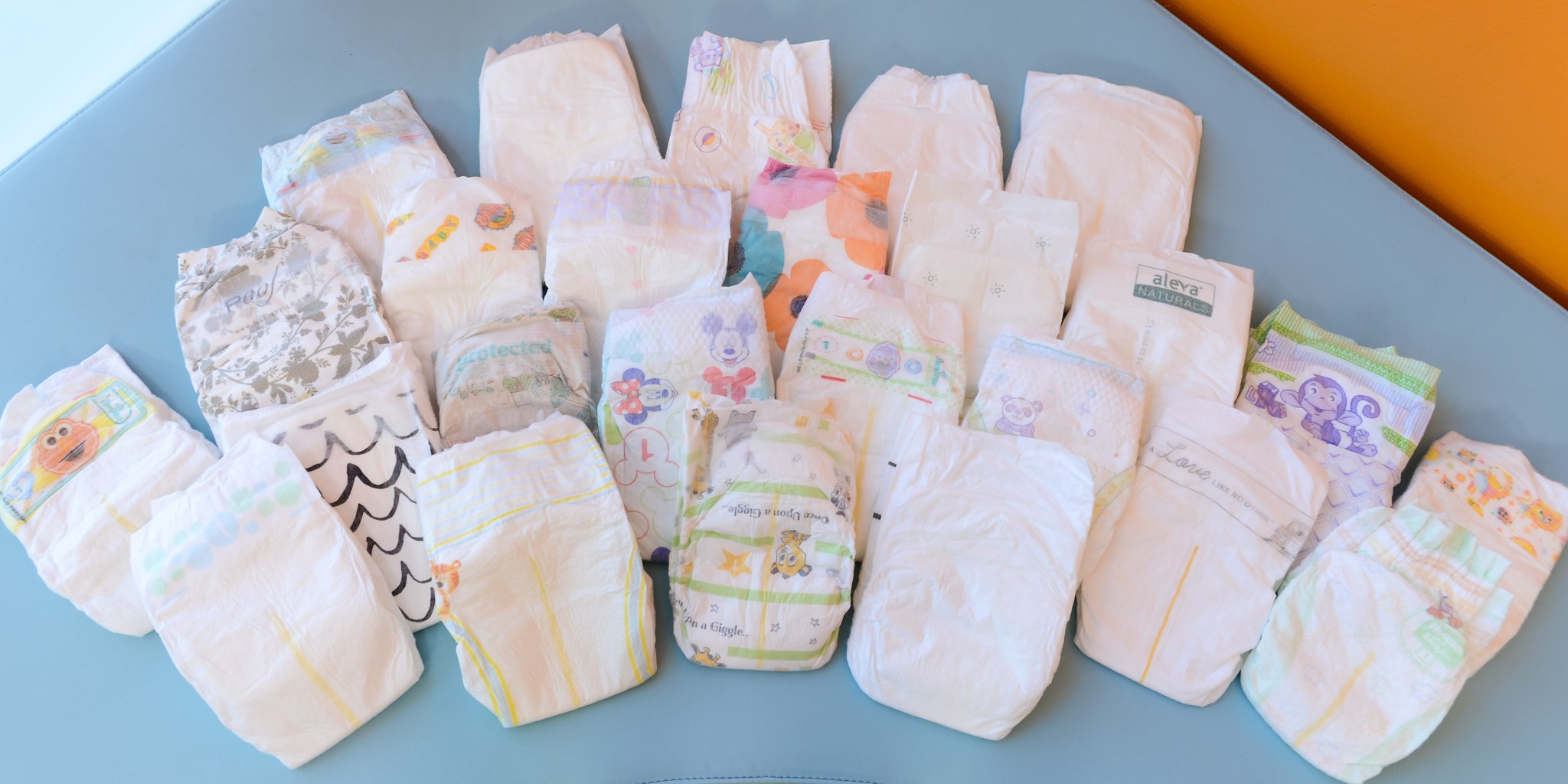
The number of disposable diapers on the market can be dizzying. After testing 60 different disposable diapers, we compared the top 19 choices in this review. With a decade of testing the best diapers, we have unique and extensive insight that helps us distinguish the best from the worst and rank everything in between. We used objective metrics such as absorption, leakage, health, eco-friendliness, comfort, and durability to rank our selection. We put each diaper through multiple rounds of absorbency testing and used each one on real babies. Afterward, we compared the results side-by-side to choose award winners. The winners are suitable for a variety of families, from those on a budget to the eco-minded and those who just want something to keep "it" contained. We are sure you will find a diaper to fit your needs.
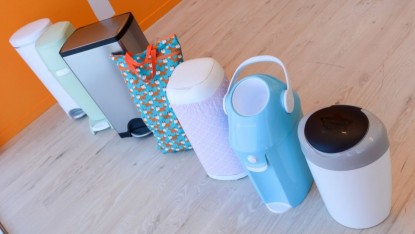
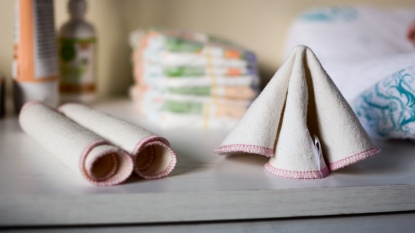
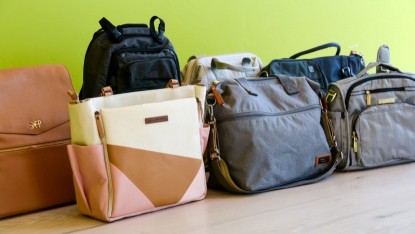
The world of diapering is vast and full of products, but we can help guide you to the essentials you'll need. From the best diaper pails to keep odors contained to top-notch diaper bags that are worthy of heading out with you and your baby, we've got the inside scoop. Also, check out our favorite cloth baby wipes, which are reusable and gentle on your baby's skin, and if you prefer to use regular baby wipes, we've tested those too. For bathtime, check out our test results for the best baby bathtubs.
Editor's Note: This review was updated on January 25, 2024, for current pricing and availability. In June 2023, we tested 13 new competitors.
Made with "Drylock" technology, which means less wood pulp is used for core of diaper
Made with Plant Based Materials (At least 23%+ by weight)
TCF fluff pulp from sustainably managed forests, a high-performance Super Absorbent Polymer, polypropylene/polyethylene/polyester nonwoven fibers, plant-derived PLA nonwoven fiber, spandex strands, and an elastomeric fill
The Parasol Clear and Dry is a high-end diaper with a high-end price. This diaper scored a perfect 10 for absorption, with impressive test results time after time. We like the impressive leak protection and the comfortable, cloth-like feel of the liner. This diaper considers the environment with totally chlorine-free production and is free of perfumes, lotion, and latex. This diaper has the coveted Nordic Swan Eco Label, is PEFC Forest Sustainability, is certified PETA Cruelty-Free, and is Vegan.
This diaper is one of the most expensive in the review, and while its stellar performance might merit the higher price, it could be a no-go for those on a budget. If your budget is smaller and you don't mind going less green, the Kirkland Signature is a competitor to consider. It has a lower price but impressive absorbency and protection from leaking. Also, this is not an easy diaper to find outside of online retailers. If you want or need a diaper, you can grab it with your groceries, then this is not your nappie. However, if you want the most absorbent diaper in the pack, with higher-than-average test results in every metric, and the price is not a concern, the Parasol is the one for you.
The Kirkland Signature is a traditional disposable diaper with a somewhat green leaning compared to other traditional options. It has a lower-than-average price and a high-ranking overall score. With impressive absorbency and leak protection in our tests, it is a stand-out option for parents on a budget.
This diaper has some considerations for health and eco-friendliness, including being perfume and lotion-free. However, it is only elementally chlorine-free and doesn't offer any information on sustainable resources or other manufacturing considerations. If you can't get your hands on the Kirkland brand, the Huggies Snug & Dry is similar and also impressed during testing. While Kirkland Signature wouldn't win any environmental awards, it is an effective solution with a lower price that offers high performance in key metrics.
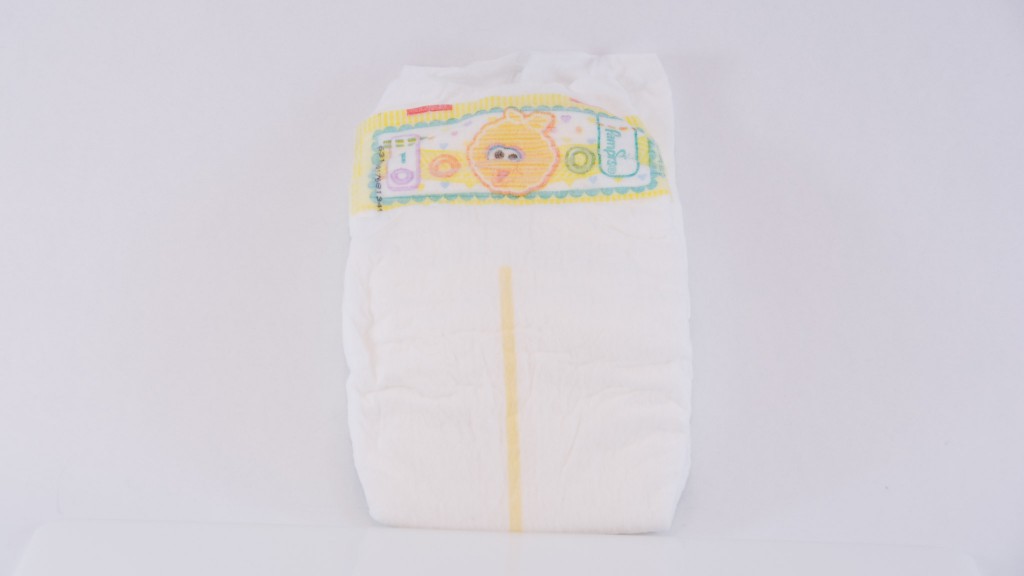
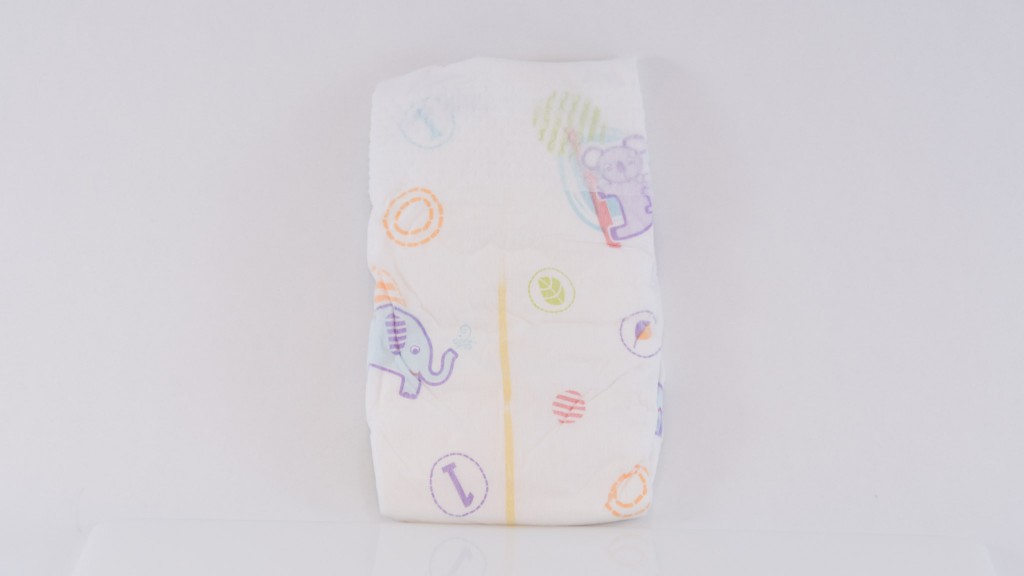
The Huggies Snug & Dry is a budget-friendly, well-known brand-name diaper you can find almost anywhere that sells baby goods. It has a cute Mickey Mouse pattern and is comfortable and durable. During testing, it performed well for absorption and for leaks, and we think most families will like what it offers and the convenience of being able to find it almost anywhere.
This diaper has few nods to the environment or to sensitive skin. This diaper says nothing about what it contains and remains mum on important things like fragrance, dyes, lotion, and latex. We will say it has a strong scent when you open it, so we assume there is an added scent of some kind. Also, they don't offer much transparency about how the diapers are made or what, if any, concessions they make for the Earth and being greener. The Hello Bello Premium could be a good alternative for anyone considering Huggies. With good absorption and more transparency on ingredients and materials, it could be the middle road that hits your goals without breaking the bank. While this diaper lacks most considerations for the Earth or baby's delicate skin, we think it performed well enough that its lower price and ease of accessibility make it one to watch if your goals are convenience and saving some money.
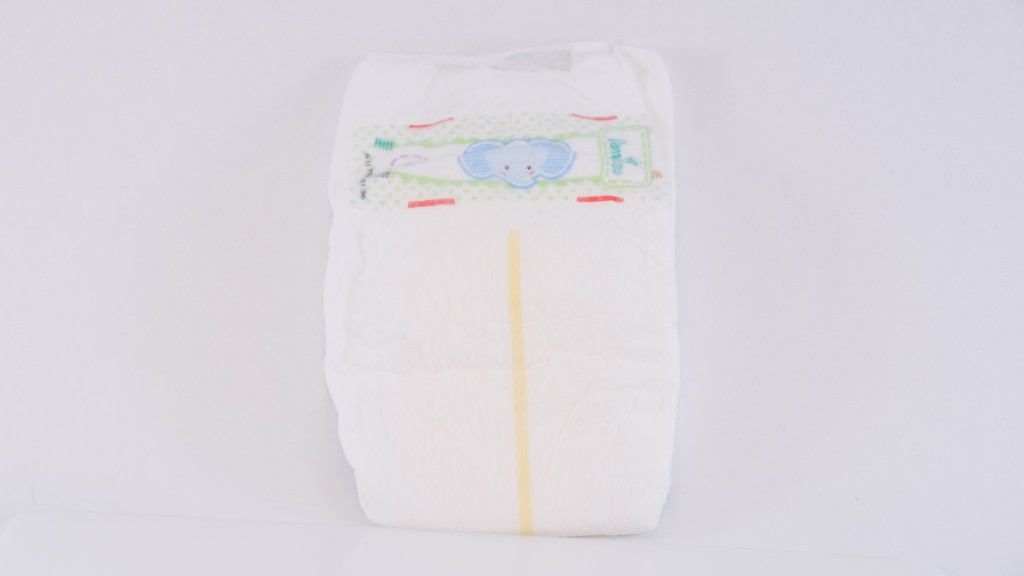
The Hello Bello Premium is a budget-friendly, high-performing diaper you can easily find in-store, online, or use with a subscription service. This impressive diaper did well in our tests for absorption and leakage compared to the competition. This inexpensive diaper is durable and comfortable enough to keep most little ones happy.
While this diaper did have more nods to the environment and baby's health than much of the disposable competition, it doesn't offer as much as some of the more green options. However, its performance is still above average, with a totally chlorine-free production and fluff pulp from sustainably managed forests and plant-derived PLA nonwoven fiber. We were excited by this diaper before testing and love that its big fan following is correct. If you want a great performer with a reasonable price tag you can grab with your groceries, it is hard to pass up the Hello Bello.
Eco by Naty is an excellent green diaper that impressed us in the lab and on babies. With advanced Earth-friendly features, it is arguably the closest option to choosing a top-ranked cloth diaper without the extra work. This company and its diapers are trying hard to set new environmental standards for diapers while prioritizing your baby's health. The best part? Not only is it green, but it earned the highest score for absorption in our tests with virtually no moisture transfer to the test paper.
This diaper may not be the best choice for parents on a tight budget as it has a higher price than much of the competition (although not the highest). It is also relatively fragile, with a less durable outer covering than much of the competition and a low durability score. Hello Bello Premium offers better durability and a lower price than the Naty. It also performed well for absorption, and they do a good job of transparency on materials and ingredients. However, if your wallet allows, and you have the Earth on your mind, you'd be hard-pressed to find a better-performing, more eco-friendly disposable diaper anywhere.
The Dyper Bamboo diapers are a unique option, offering the ability to return them to the company to be turned into compost. This diaper is durable, with comfort higher than the average option, which is impressive given its compostable design. This diaper is free of dyes/inks, perfumes, and lotions and has a totally chlorine-free production. Dyper offers a composting program to help keep diapers out of the landfill. Their "Redyper" program is available curbside in 21 major cities in the United States, or you can ship your used diapers for an additional fee. This program uses an industrial composting process to accelerate the natural decomposition process. They control the temperatures, aeration, carbon, and nitrogen content, allowing aerobic bacteria to thrive, resulting in final composting in 14-plus weeks. Local pickup is $10-15 a pickup, plus the cost of compostable bags.
This diaper has poor absorption results and does not offer the best leak protection. However, this could be acceptable if your goal is to avoid filling a landfill with your diapers. The compostable part is also a bit of a hassle as you can't just toss them into your compost pile, and we wonder what is the carbon footprint of shipping supplies and returning them to the compost area. If you want a more eco-friendly option and aren't ready to buy into the "return" system required for Dyper, the Eco by Naty could be a better choice for your baby and time investment. Overall, the Dyper option didn't perform that well in the most important metric of absorption, but we suspect some folks will be happy to overlook this in favor of knowing their diapers go somewhere other than the landfill.
Dyper Bamboo is a compostable diaper that might appeal to those worried about their landfill impact.
Credit: Abriah Wofford
Fall From the Top
If you've been here before, you might remember that Babyganics diapers were once our favorite and earned an Editor's Choice award in previous iterations of this review. With the high overall score and a high test result for absorbency, this made sense. Recently, Babyganics discontinued that diaper and launched a new diaper, the Babyganics Triple Dry. Unfortunately, this newly designed diaper did not perform well in our tests, with some of the worst scores compared to the competition, including the old Babyganics diaper. Not only did it fall from the first place rank, but it fell all the way to the bottom.
Compare Products
Babies go through several thousand diapers in a lifetime. Finding one that works for your goals and budget is key.
Credit: BabyGearLab Staff
Why You Should Trust Us
Our BabyGearLab team has been professionally testing disposable diapers and other popular baby gear since 2013. Combine that with years of parenting and childcare experience outside the lab, and we are confident in our knowledge and use of all things diaper and diapering related.
We've done a deep dive and tested more than 19 options for our recent disposable diaper update.
Credit: Abriah Wofford
Our testing for disposable diapers is divided into four rating metrics:
Absorption tests (45% of overall score weighting)
Leakage tests (25% weighting)
Comfort tests (20% weighting)
Durability tests (10% weighting)
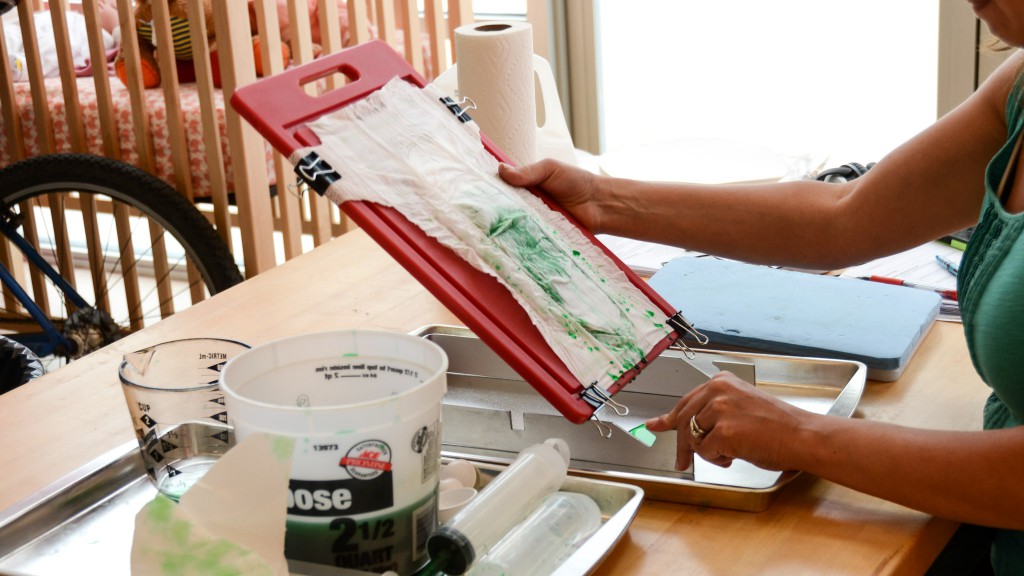
Our mock urine absorption testing includes simulating the weight of a baby wearing the diaper.
Credit: Abriah Wofford
We have purchased, tested, and used over 60 different disposable diapers since 2012. Our testing puts each product through an extensive multi-point performance analysis ranking everything from absorption to durability. Multiple babies in multiple homes have helped us assess performance, comfort, leaks, and more.
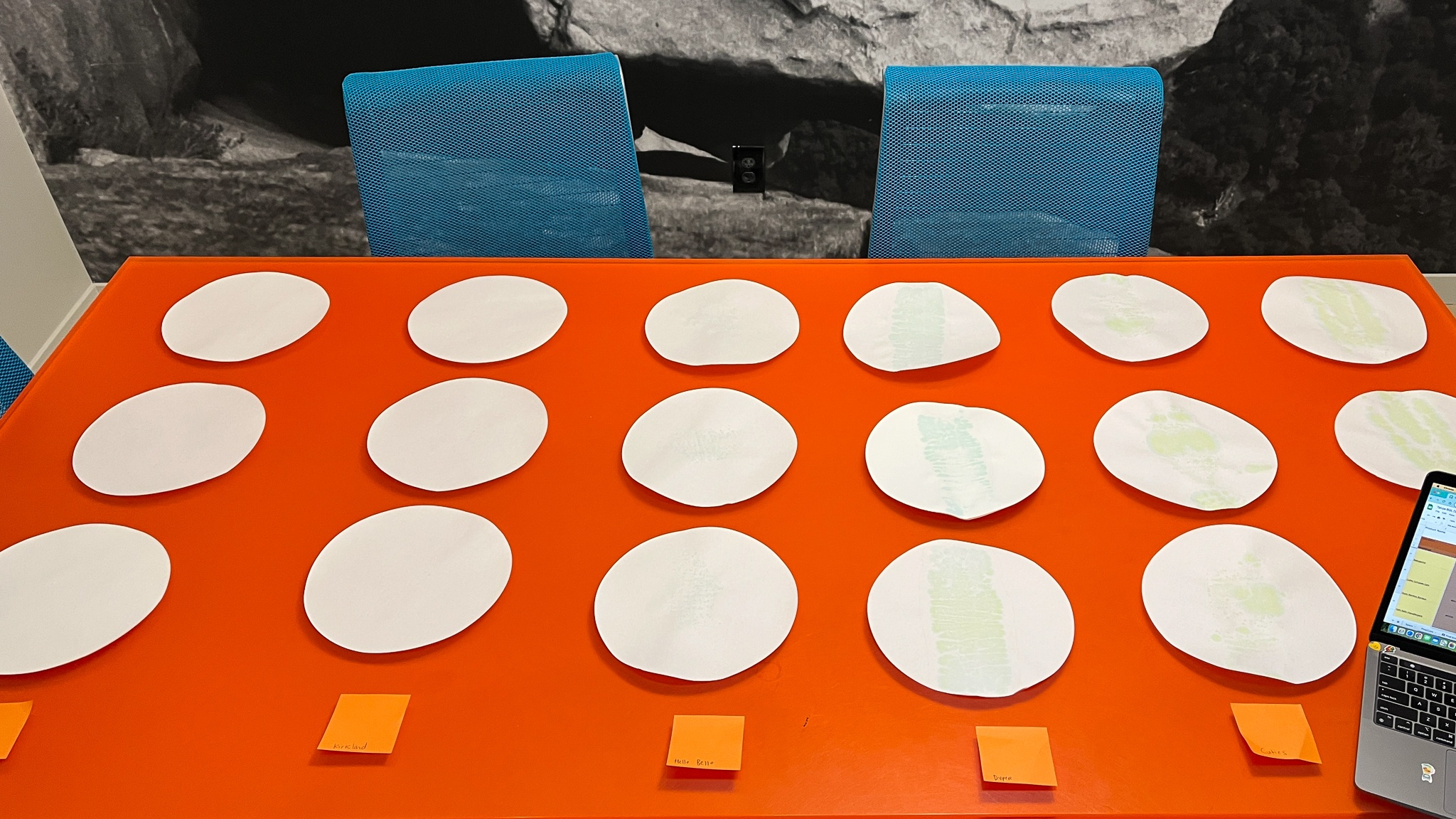
Absorbency filter paper comparisons during our most recent round of testing. Each diaper was tested at least three times to ensure consistency in testing and diaper performance.
Credit: Genaveve Bradshaw
Disposable diapers undergo more than 29 individual tests to assess performance. The most critical test metric is the absorption performance, which corresponds to 40% of the overall score, the highest weighted metric in the review by far. Our absorption rating is informed by an average of 3 specific tests that includes an average of three in-lab tests using our proprietary mock urine. Our in-house tests involved pouring 100 ml of a mock urine solution over each diaper with a series of weighted and unweighted periods to mimic an active baby's movement when wearing a wet diaper. This review also utilizes real-world data from our little testers, including product observations from multiple testers.
Each diaper is put through the rigors of absorbency and leakage testing under the same circumstances for an apples-to-apples comparison.
Credit: Genaveve Bradshaw
We use a combination of hands-on (real world) and in-lab tests to measure qualities such as absorbency, leakage, and durability for our review and testing. Our findings typically paralleled what we learned in the lab and online research when using the diapers on real babies. Diapers that did poorly in our leak test also leaked in real life, and vice versa. Overall, we spent hundreds of hours pushing these diapers to their limits and seeking out real users' opinions and experiences. This comprehensive analysis gives us a well-rounded view of the best disposable diapers on the market. As diapers make changes and updates similar to car models, we've noticed regular shifts in rankings, with some previous high-ranking options falling to the bottom and some bottom-ranked products shooting to the top. These kinds of design changes mean a regular commitment to updates and continued testing for our in-house lab techs.
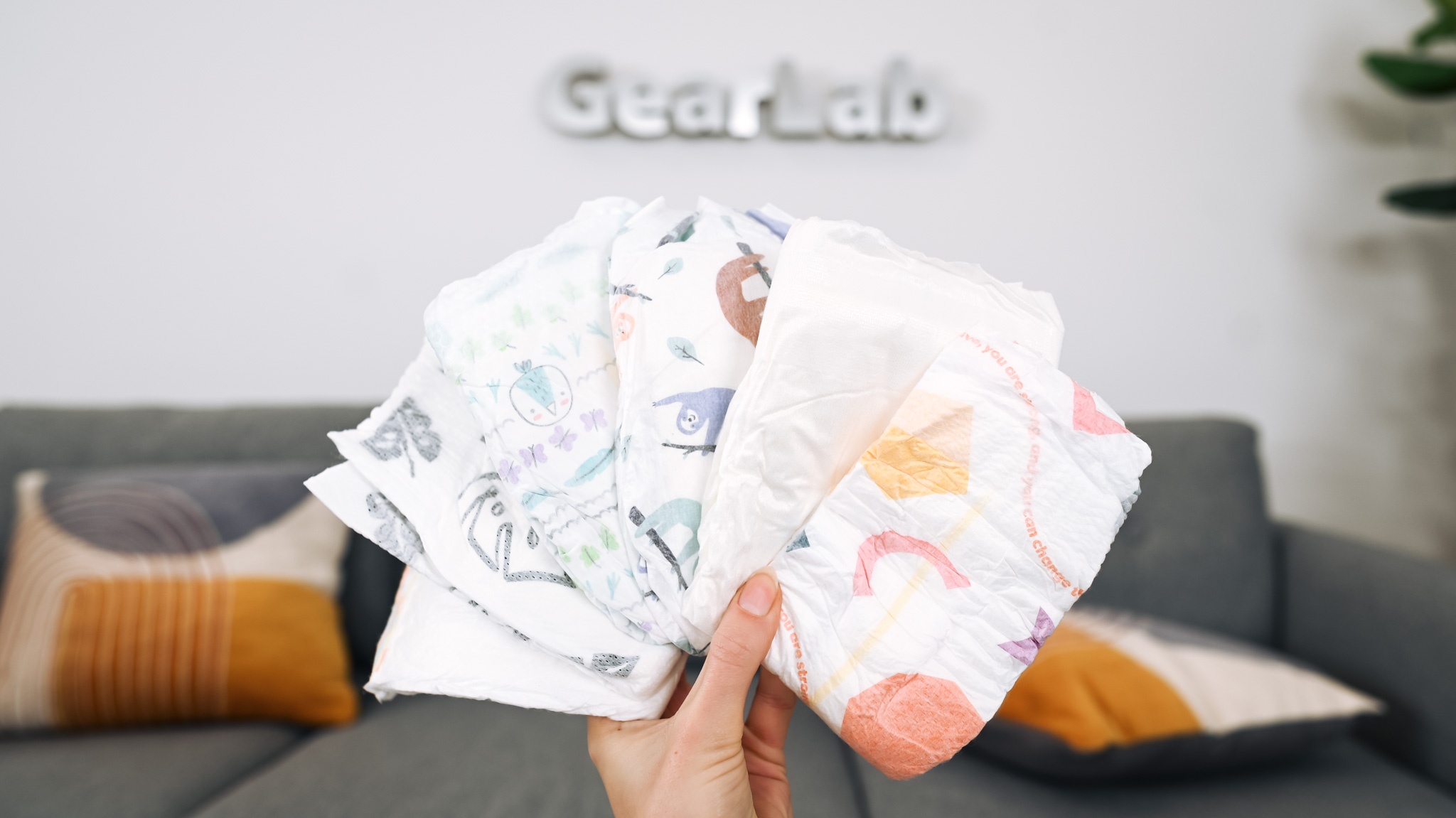
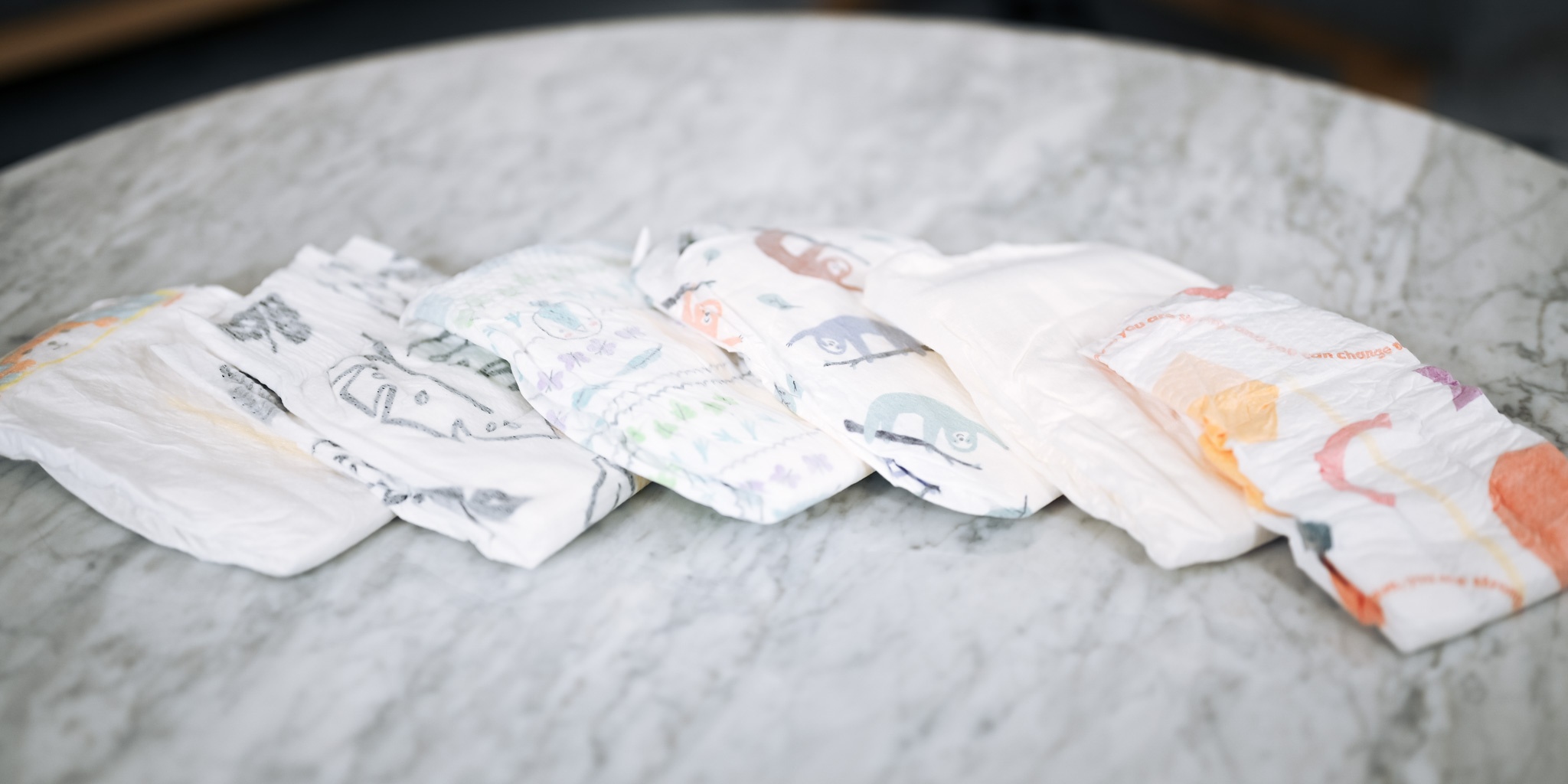
Six popular and intriguing diapers are ready for testing.
Credit: Abriah Wofford
Dr. Juliet Spurrier, a mother of two, leads the BabyGearLab safety standards and product selection team. She is a board-certified pediatrician and a Fellow of the American Academy of Pediatrics (AAP). She uses her infant and early childhood well-being knowledge to guide our testing. On the research end of the review are Senior Review Editor, Wendy Schmitz, a mother of 2, and Senior Review Analyst, Bob Wofford, a father of 7. With hundreds of hours of in-depth research under their belts, their knowledge of the ins and outs of the disposable diapers world is vast. Bob helped develop the first intensive side-by-side absorption and leakage review process ever completed. In charge of in-house tests, this time is Senior Review Editor, Abriah Wofford, who has been conducting testing with BabyGearLab since 2015.
Our scientific testing processes ensure apples-to-apples comparison between diaper brands.
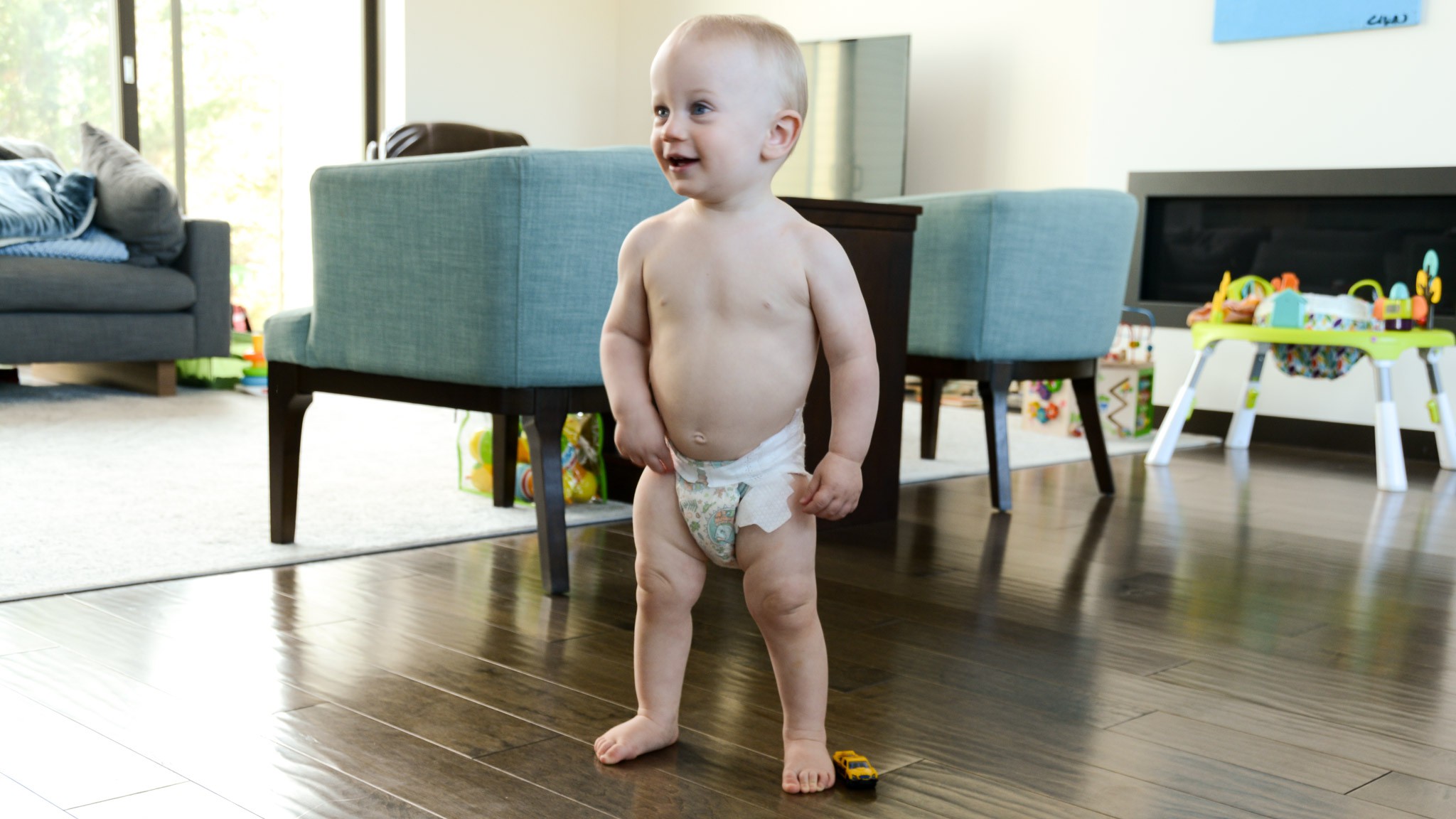
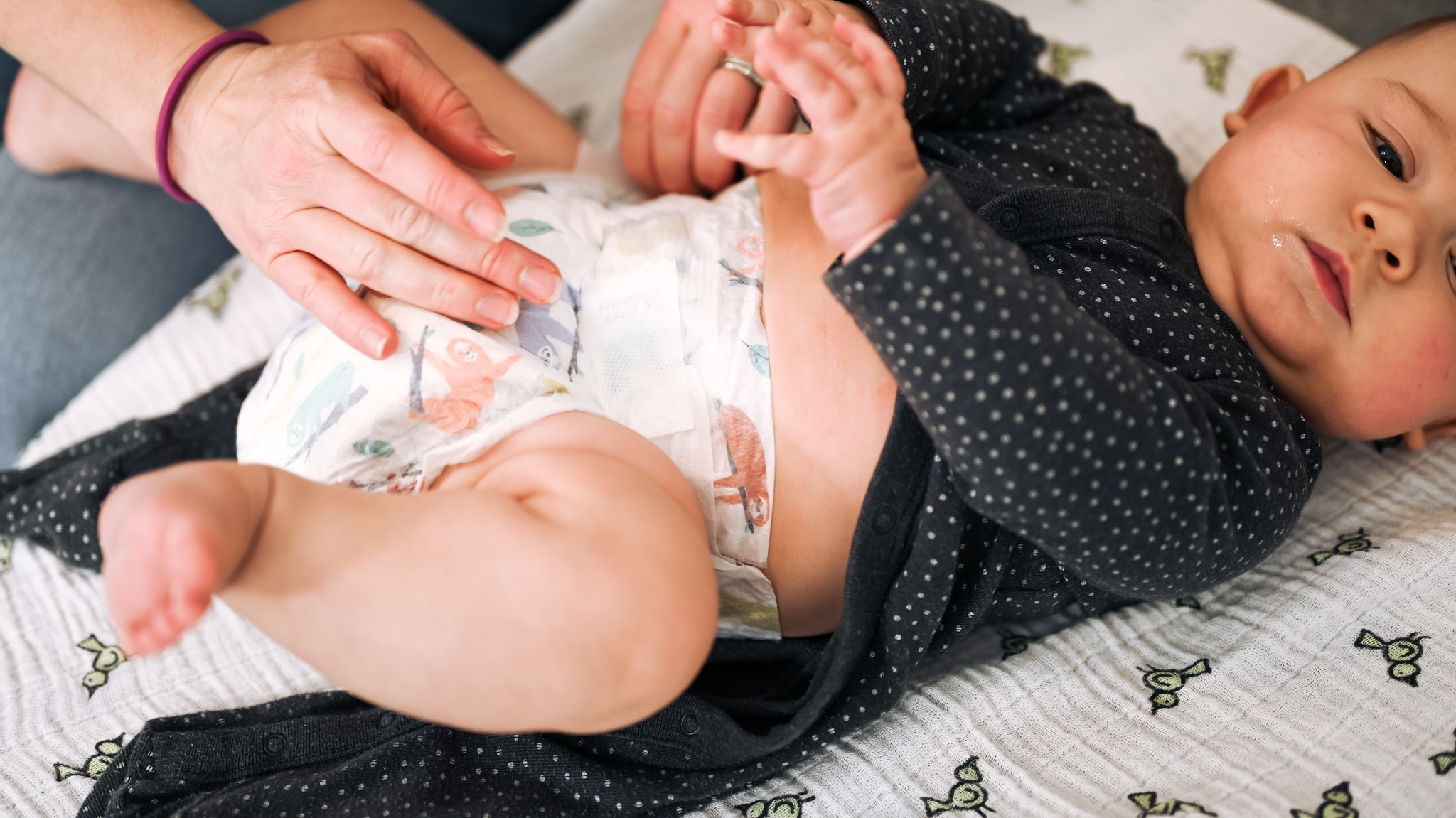
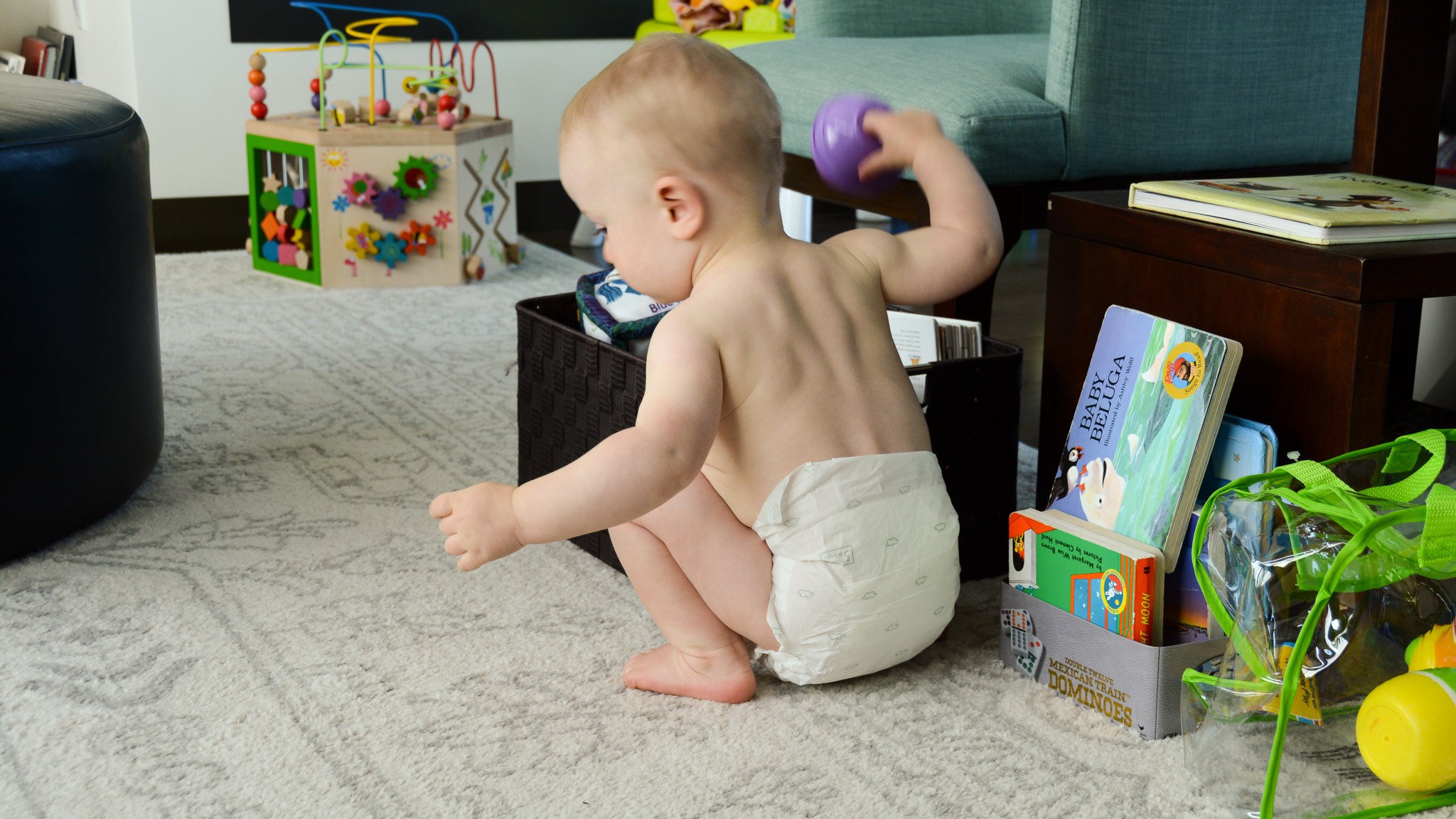
We enlisted a few active youngsters to do some hands-on testing in real-life situations.
Analysis and Test Results
We purchased and tested more than 60 diapers over the years and included 19 in this round of testing. We used a combination of day-to-day diaper use on real baby bottoms and in-house lab testing for our evaluation. We supplemented with in-depth research to compile facts and observations to rate each diaper relative to the competition to help you find the best diaper for your little one.
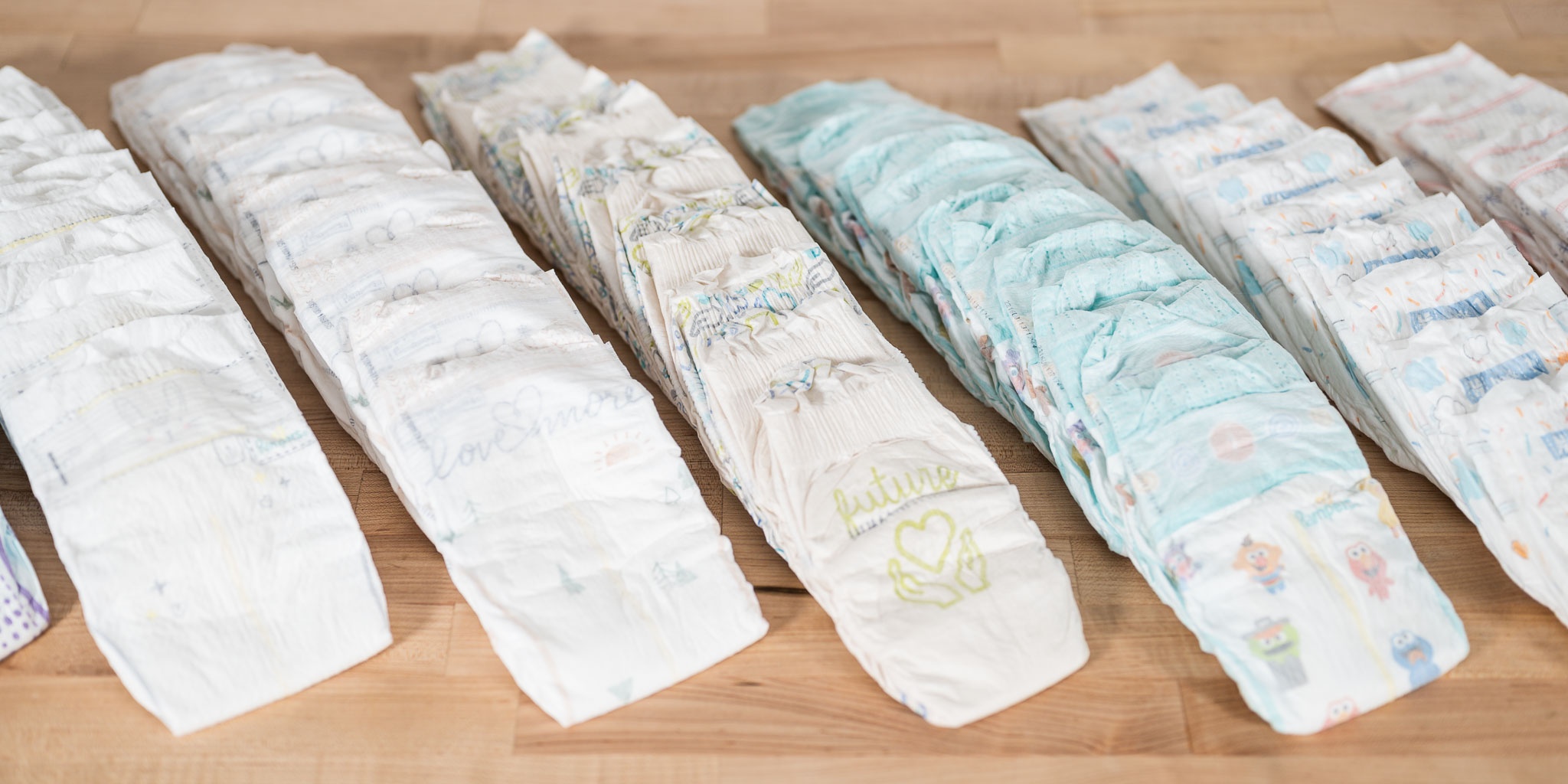
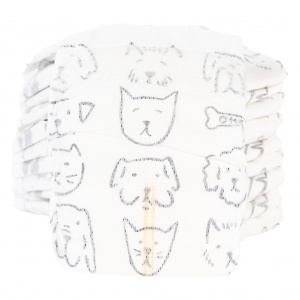
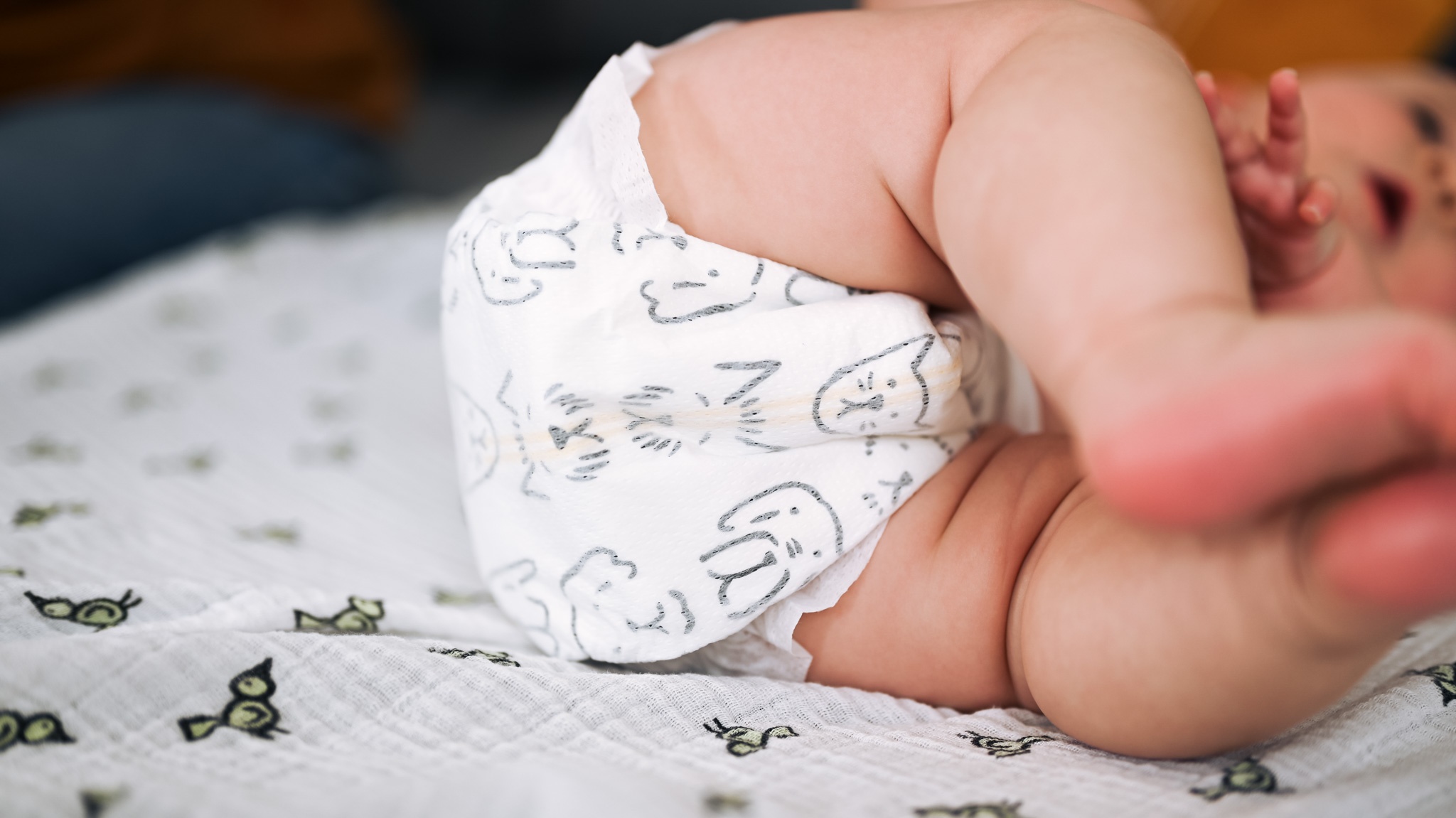
The Honest diapers come in a variety of patterns you can choose from for a more custom look.
Credit: BabyGearLab Staff
When making our diaper selections, we carefully consider the options and intentionally include various styles, brands, and price ranges. We want to provide a complete picture of the best diapers across the spectrum of options. We put green diapers head-to-head against traditional disposables.
Disposable Diaper Review vs. Overnight Diaper Review
The Disposable Diaper testing is performed on size one diaper (or equivalent) and is primarily for finding the best diaper options for newborns and younger infants. This review's information and test results may also apply to other-size diapers. However, we found a disparity in absorption test results for the smaller-sized diapers compared to the size 3-4 diapers we tested in our Best Overnight Diaper Review, which has older babies with heavier night tie wetting in mind. Therefore, any discrepancy in absorption ratings between reviews for the same diaper results from a diaper size difference.
The Kirkland Signature scored well in most metrics and high overall.
Green Diapering
Before you let your green-guilt run away with you, you should know that even the Sierra Club which takes a position on cloth vs. disposable, still admits that the decision is a tough one when trying to be more environmentally responsible. There are pros and cons to each method of modern diapering, including cloth diapers, disposables, and the newer, unique compostable Dyper option.
Value
Finding value in a single-use product can be tricky. After a few hours of wear, every diaper inevitably ends up in the trash that same day. The price of disposable diapers ranges from about 0.14 to 0.59 per diaper. Forty-four cents is a rather large gap when you stop and consider how many diapers your baby will use throughout their diapering years. Pennies quickly add up to dollars when you multiply by the thousands. Depending on the budget you are working with, the overall cost may be the primary consideration in choosing the perfect product. However, we urge you to consider that each diaper's quality and absorbency impact the average daily number of diapers you use. In reality, a slightly more expensive diaper can potentially lower your long-term spending because you may use fewer of them.
A few of the top performers in our recent update have impressive test results and reasonable prices.
Credit: Abriah Wofford
In this review, the top performers have prices from 0.20 to 0.59. These diapers score well for absorbency and leakage, which should translate to fewer diapers in general and money in your pocket. This means there is a budget-friendly choice with an impressive performance in the Kirkland Signature diaper. It has one of the lowest per-diaper prices, and you can't go wrong with the absorption or leak protection. Alternatively, if you want great absorption and comfort with better eco-health, Hello Bello is reasonably priced and easy to find in stores and online. It can be even cheaper if you sign up for a subscription. Both diapers impressed during testing and give you impressive options for different diapering goals. If you'd like a wallet-friendly diaper that is easy to find and brand name you know, then Huggies Snug & Dry is one to consider.
Put Diapers on Your Registry
Diapers make great baby gifts! No parent was ever sad about free diapers, and getting gifts from different brands is a great way to find what works for you.
Babies go through approximately 6,000 diapers during their diaper wearing years!
Credit: Abriah Wofford
Wait! How many diapers am I going to need?
In the first year alone, your tiny tot will go through about 2,500 diapers. If that number seems daunting, it breaks down to about 10-12 diapers a day for the first 2-3 months and about 6 per day for the rest of the year. By year two, the pace slows to about 3-4 per day and continues into year three when potty training adds a twist to your diapering routine. Even after potty training, most children use 1-2 overnight diapers per day for about another year for naps and nighttime.
Estimated diaper usage over time is shown to be a total of nearly 6,000 diapers in the chart above. Your mileage will vary since babies grow at differing rates and the total depends on potty training timing, and overnight use after potty training. (Click on the chart to enlarge)
Credit: Pampers, Huggies, US CDC Weight-for-age 50th percentile
Add it all up, and your precious bundle of joy will amass a mountain of roughly 6,000 dirty diapers in total (but up to 9,000 in some estimations). That's a lot of diapers to put in the landfill, which is why a growing number of parents are considering green disposables or choosing cloth diapers instead.
We've tested a variety of diapers from popular, well-known brands to unique and upcoming brands you might be interested in.
Credit: Abriah Wofford
So, what is all of that going to cost me?
If you are a budget-savvy shopper, the cost might be the driving factor in your diaper selection. Let's assume that our estimate of 6,000 diapers over your baby's lifetime is correct. The price per diaper varies depending on the diaper's size, so diapers will get more expensive as your baby grows. When considering lifetime cost, keep in mind that your baby will spend a lot more time in size 3 & 4 diapers than in the smaller sizes. For these reasons, we recommend comparing the price of size three diapers as a standard because it will give you the most realistic cost average over the long run.
The new Kirkland Signature diapers proved to be significantly better than the old Supreme diaper offered by Kirkland.
Credit: Abriah Wofford
If you buy a quality (yet affordable) green diaper, you'll spend, on average, about $0.35/diaper. It is closer to about $0.50/diaper for a top-notch green diaper option. And a basic big-name brand will be about $0.34.
Dyper Add-On Cost
Dyper brand is compostable, but only if you buy the return bundle package or have pickup available in your area. So if you choose this method because it keeps your diapers out of the landfill, don't forget to add this cost into your lifetime calculation. Also, it didn't absorb well in our test, so you might go through more diapers than the higher-scoring options, potentially twice as many
Huggies Snug & Dry is a higher scoring, easy to find disposable option from a well-known brand name.
Credit: Abriah Wofford
Over the four years you will be using diapers, what does that come to?
A good green diaper will cost roughly $2,016 for 4 years, or $42.00 a month
High-scoring green diaper will cost approximately $2,880 for 4 years, or $60.00 a month
Popular brand name diapers will cost about $1,728 for 4 years and about $36.00 a month
Be aware that these prices are high; if you sign up for a subscription program offered by many retailers, you could get a sizeable discount. While the price of each diaper might feel like a wash over four years, it could translate into a cost difference of over $1,000.00. Of course, these are just averages, and actual costs will vary on how often you change your child's diaper and your average consumption over time. Some diapers will hold more and require fewer changes, while others might need frequent changes to avoid leaks or durability problems. Just for comparison sakes, these costs are on par with setting up a cloth diapering system and your lifetime investment depending on the brand and how you choose to launder them.
The Parasol diaper earned a perfect score for absorbency.
Credit: Abriah Wofford
Is It Worth Paying a Premium for the Best Diaper?
When spread out over your baby's ~4 diaper-wearing years, the price difference between a high-performing green option vs. the best-performing diaper is almost $20 per month. Over one year, this is an added cost of nearly $240. With this difference, you might wonder: is it really worth the extra money to buy a better diaper?
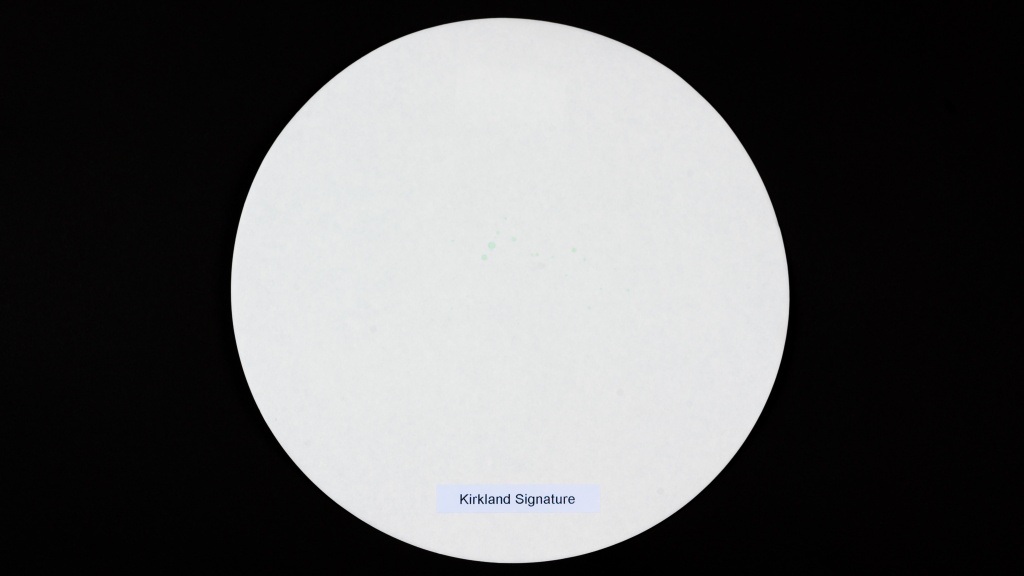
The absorption filter paper for the Kirkland tests showed no moisture transfer indicating quick absorption of our mock urine that is locked away from the baby's skin.
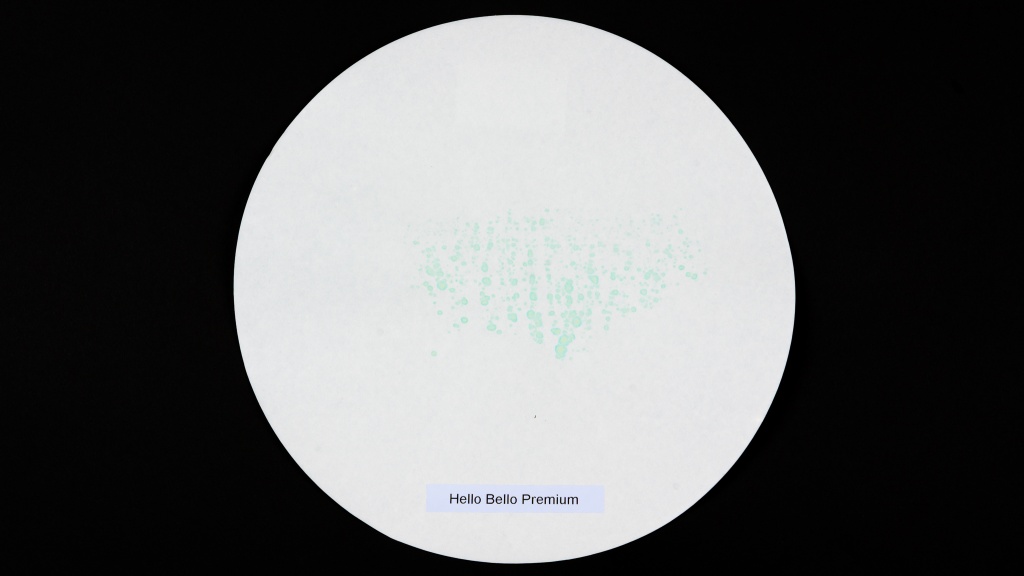
The Hello Bello diaper has minimal moisture transfer to the filter paper during three rounds of tests.
The difference in metric performance between Parasol and Kirkland or even Hello Bello isn't as significant as they've been in the top diapers of past testing. While we love a high-scoring product, the price difference to purchase the Parasol is, in our mind, perhaps not worth the added expense as there are top-tier options that cost significantly less but offer about the same test results in key metrics. Kirkland has similar absorbency and leak protection scores as Parasol. Even if your goal is more environmentally friendly or health conscious, Hello Bello has higher than average scores for those metrics and a lower price. All that said, if you want the absolute best, and money is no object, we think most families would be happy with Parasol.
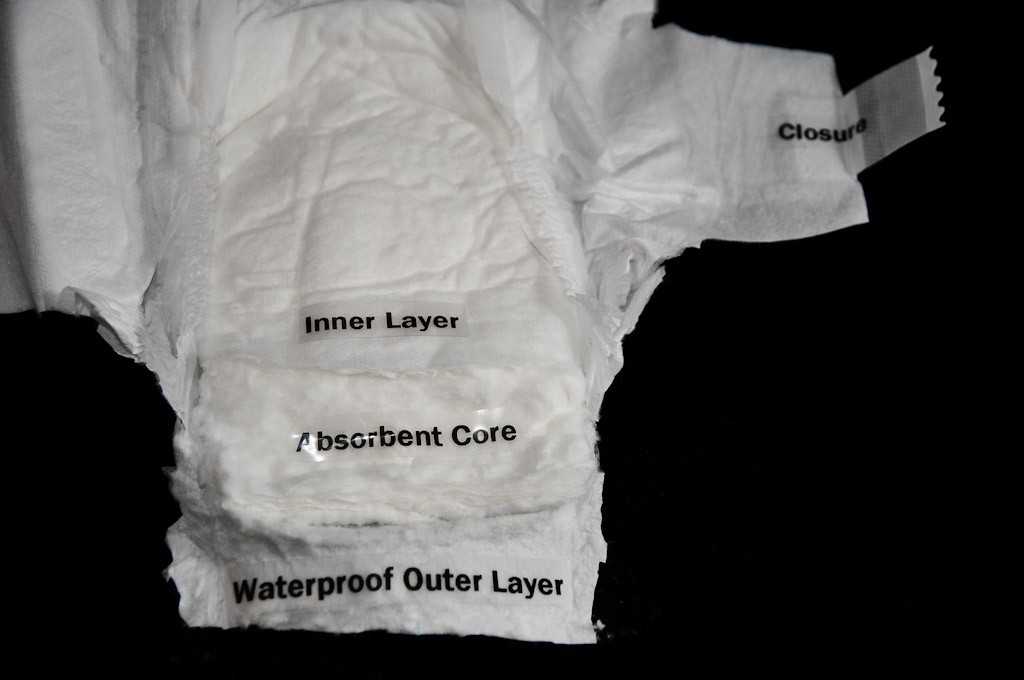
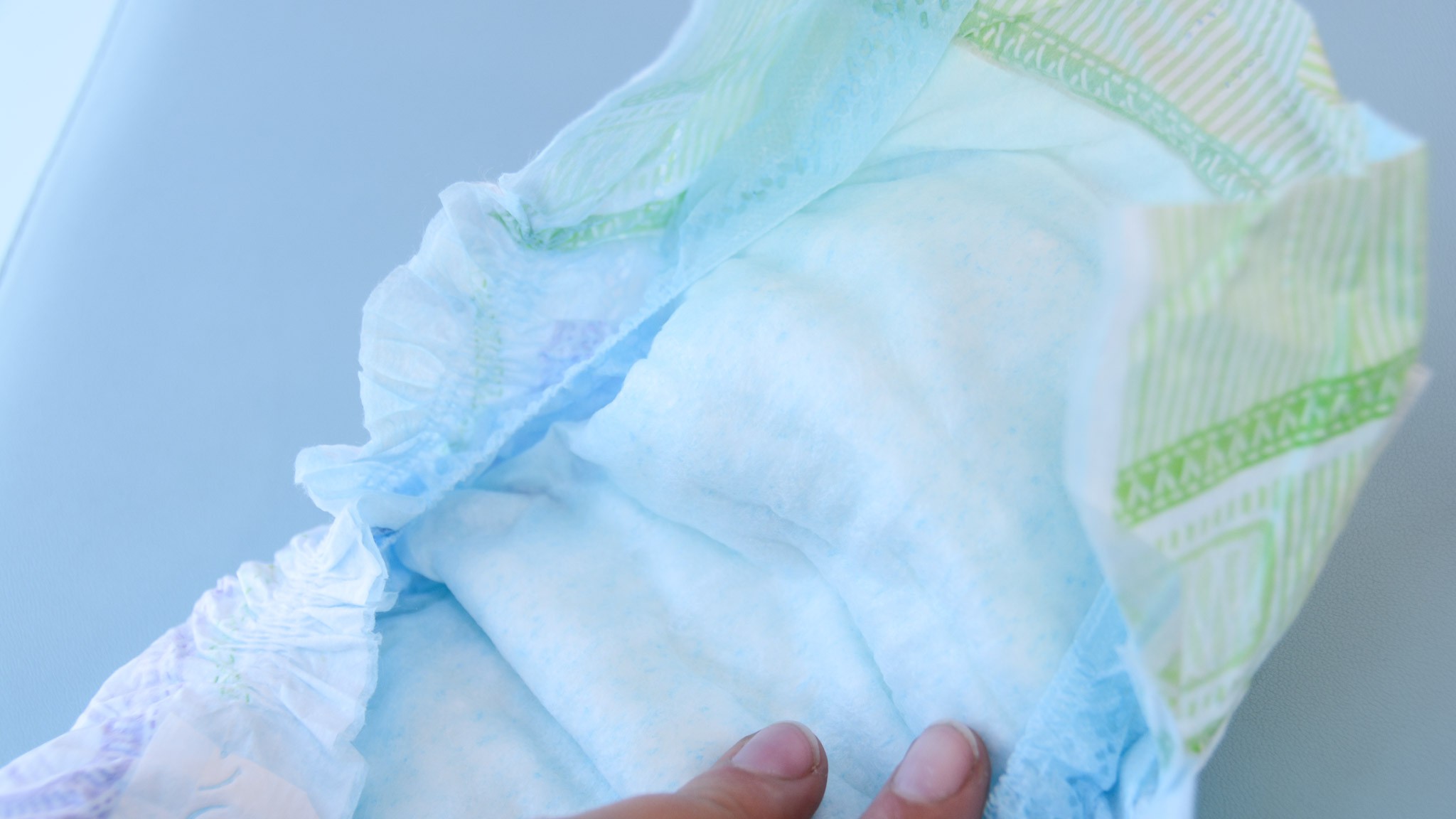
Diapers are constructed in three layers, an inner layer that sits against baby's skin is designed to be soft, stay relatively dry, and wick away moisture into the core. The absorbent core is designed to pull moisture in and trap it to keep wetness away from baby to avoid rashes. The outer layer is waterproof to prevent leaks.
The secret sauce inside the absorbent core layer of every disposable diapers is a synthetic material called Super Absorbent Polymer (SAP). It is magic in it's ability to suck up to 300 times it's weight in water, which is why it is so widely used. Researchers are now making a plant-based SAP in labs, but as far as we can tell, every diaper in our review likely uses the more time-tested petroleum-based SAP.
What's In My Baby's Diaper?
Most disposable diapers look a lot alike, and all of them have similar components. They each contain an absorbent core, an inner liner designed to keep your baby's skin dry, and a waterproof outer layer to keep it all contained. However, the materials used in these components may differ from diaper to diaper, and some ingredients may have potential toxicity. Parents may (rightly) be concerned about their diapers' contents and want to know what ingredients their baby is exposed to. We recommend looking at the ingredient list of your diapers to look for potentially hazardous materials that may be present.
Credit: Genaveve Bradshaw
Absorbency
Absorbency is THE most critical performance criterion for any diaper. High absorbency levels will reduce rashes, leaks, and the frequency of diaper changes. To reflect this importance, we emphasize this metric in our testing and go in-depth with our analysis. We perform hands-on and in-house lab tests to wring out each diaper's real-world absorbency performance. We usually find a surprising difference in absorbency levels between brands.
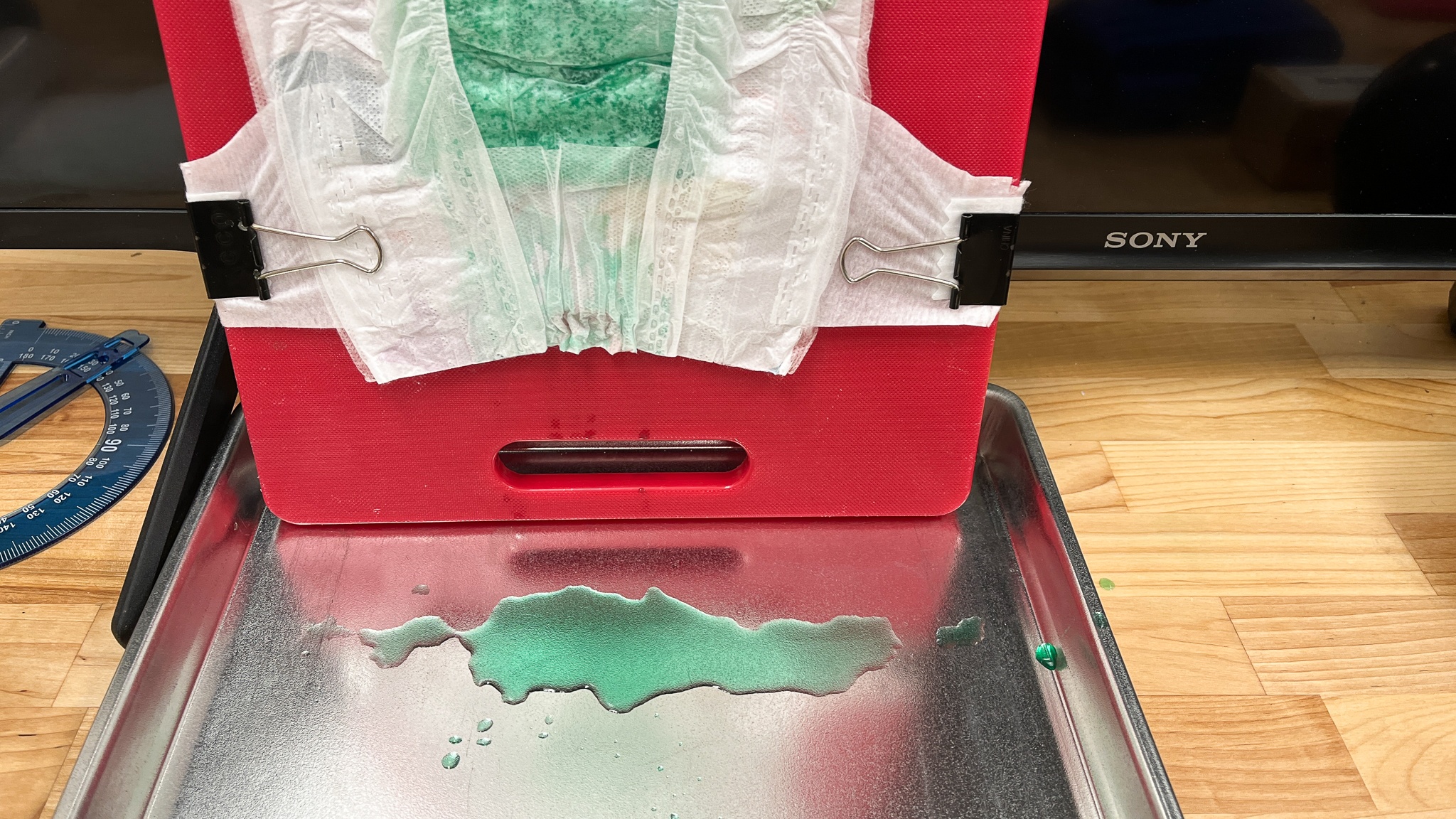
To test how well a diaper absorbs mock urine, we do an absorbency test, including weighting and waiting before pressing filter paper on the wet diaper to gauge how well the diaper locks in moisture. Parasol had no urine transfer to the paper.
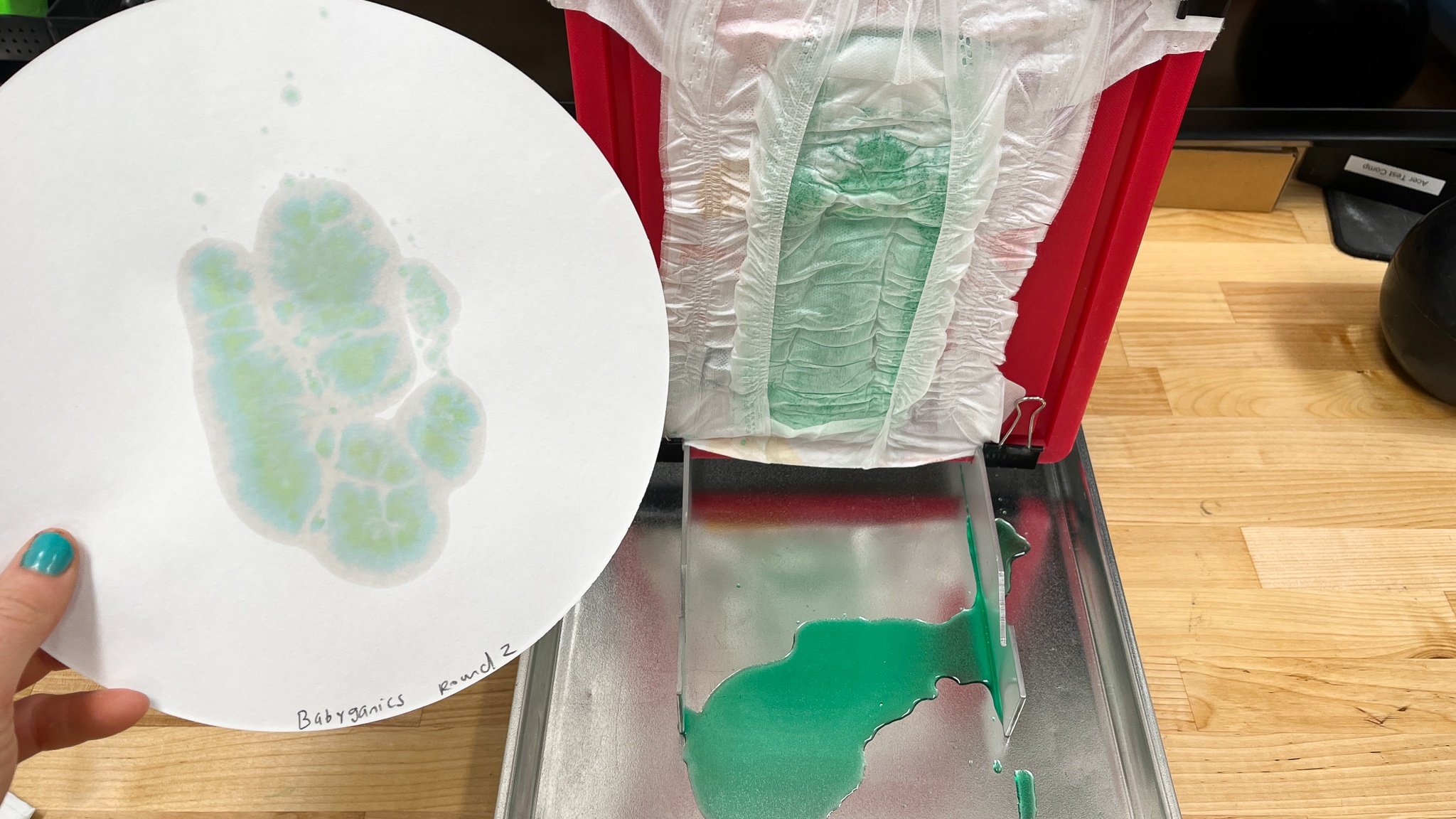
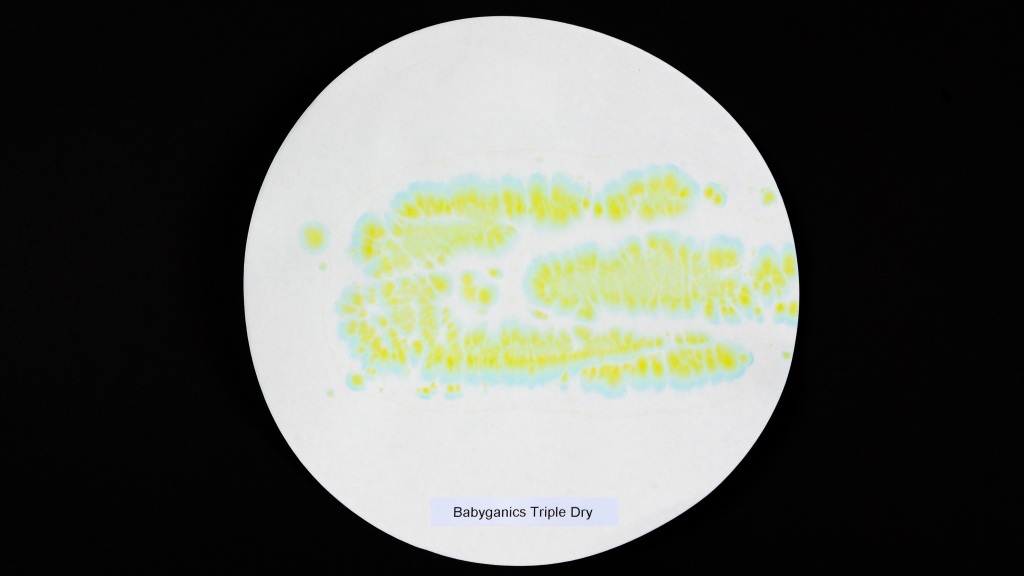
The moisture still left on the Babyganics diaper, and then the filter paper during testing, show this diaper is struggling to absorb and lock in moisture.
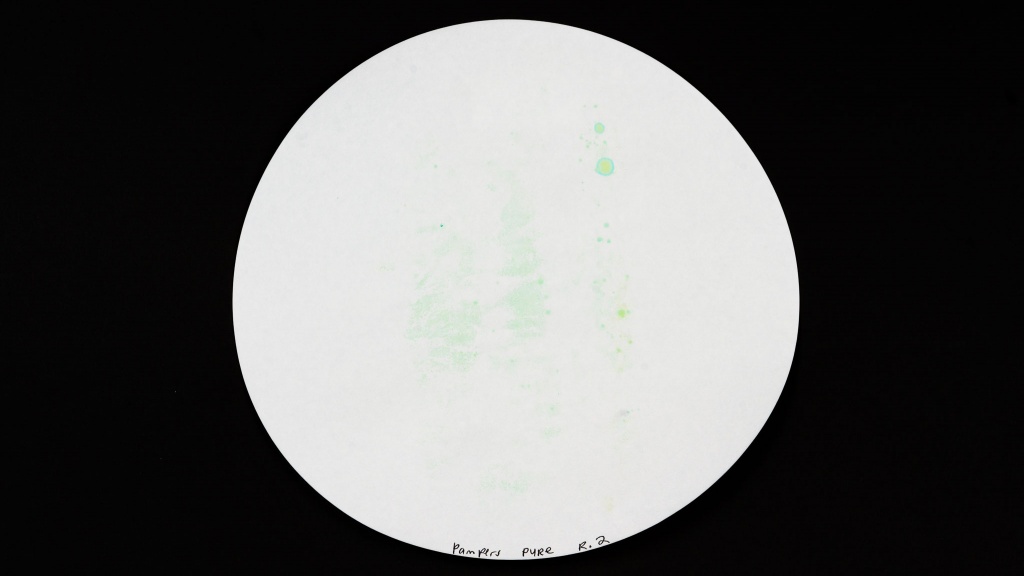
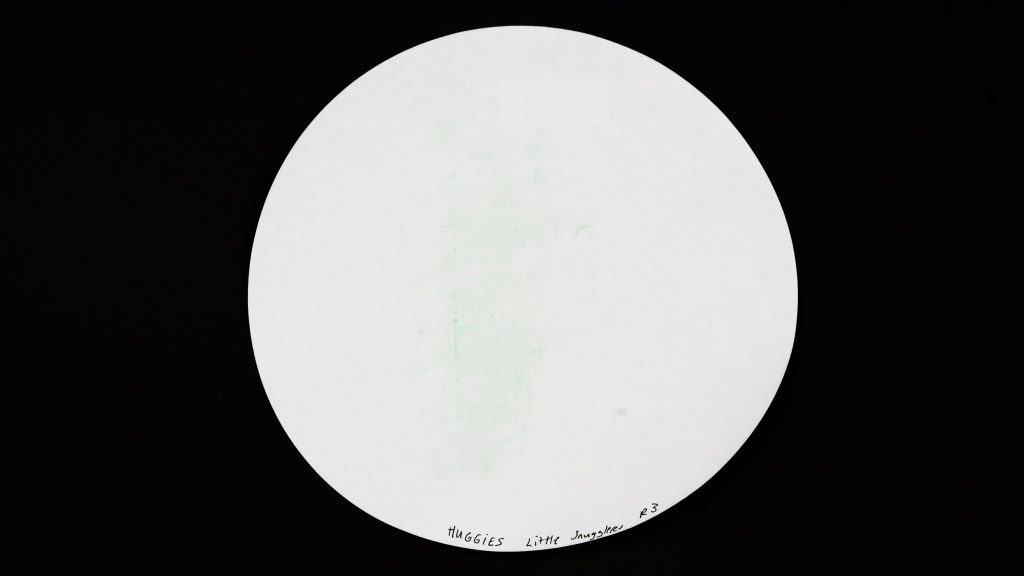
The photos above include a comparison of diaper absorption from the best in the group (left) to some of the worst (middle & right).
We historically have been very impressed by the more green diapers that consistently deliver above-average absorbency results, but in this go around, the more traditional diapers gave them a run for their money.
SAP is an acronym for Super Absorbent Polymer. It is the component of disposable diapers that gives them the ability to absorb liquid and trap it to avoid leaks. You can see the SAP expand as it locks in the "urine."
Credit: Abriah Wofford
The top-performing options are Parasol, Kirkland Signature, and Eco by Naty. The next in line are Hello Bello Premium and Huggies Little Snugglers. These results indicate to us that traditional and green diapers are nearly head to head in their performance for absorbency, with three green diapers and two traditional options leading the charge in this review. We love having the option to buy great-performing diapers that prioritize eco-friendliness in their production process. The lowest scoring options for absorption were Andy Pandy, Babyganics Triple Dry, and Luvs.
Pure performed well in our tests for absorption, with filter paper test results showing better than average ability to lock away moisture from your baby's skin.
If you are trying to decide between Pampers and Huggies, we recommend you go with Pampers Pure or Huggies Snug & Dry. Both brands have similar scores for absorbency, but Pampers offers a little more for baby health, which gives it a bump over the Snug & Dry. However, if you want the best or most absorbent diaper for your baby, we recommend looking at all of the high-ranking diapers and award winners. Why? Because there is much to be had in the brands that might be new to you. Better absorbency, more considerations for the environment, and better designs for sensitive skin. For instance, Kirkland Signature has impressive absorbency and leak protection with almost perfect scores. Hello Bello Premium is a high performer as well, but offers more for the Earth and baby.
Huggies Snug & Dry is a popular diaper with a good leakage score but poor absorption.
Pampers Swaddlers is a soft and cozy diaper that almost feels like cloth.
Pampers Swaddlers Sensitive is a soft diaper with wetness indicator.
Walmart White Cloud diaper is budget friendly with a better than average performance for absorption.
The Walmart Parent's Choice diaper has a cute pattern (contains dyes) and a cheaper price.
Babies R Us store brand diapers offer fairly good absorption and leak protection but provide very little for the health or environmentally conscious.
Do Big-box Diapers Perform the same as Pampers and Huggies?
In short, yes and no. While we did not find a significant difference between the two varieties since we started testing a decade ago, our test results show that the store brand options performed about the same or worse now but performed better in the past. In the past, Kirkland was an average diaper, but the most recent offering of Kirkland Signature is a high scorer that impressed us during testing, performing better than almost all of the competition.
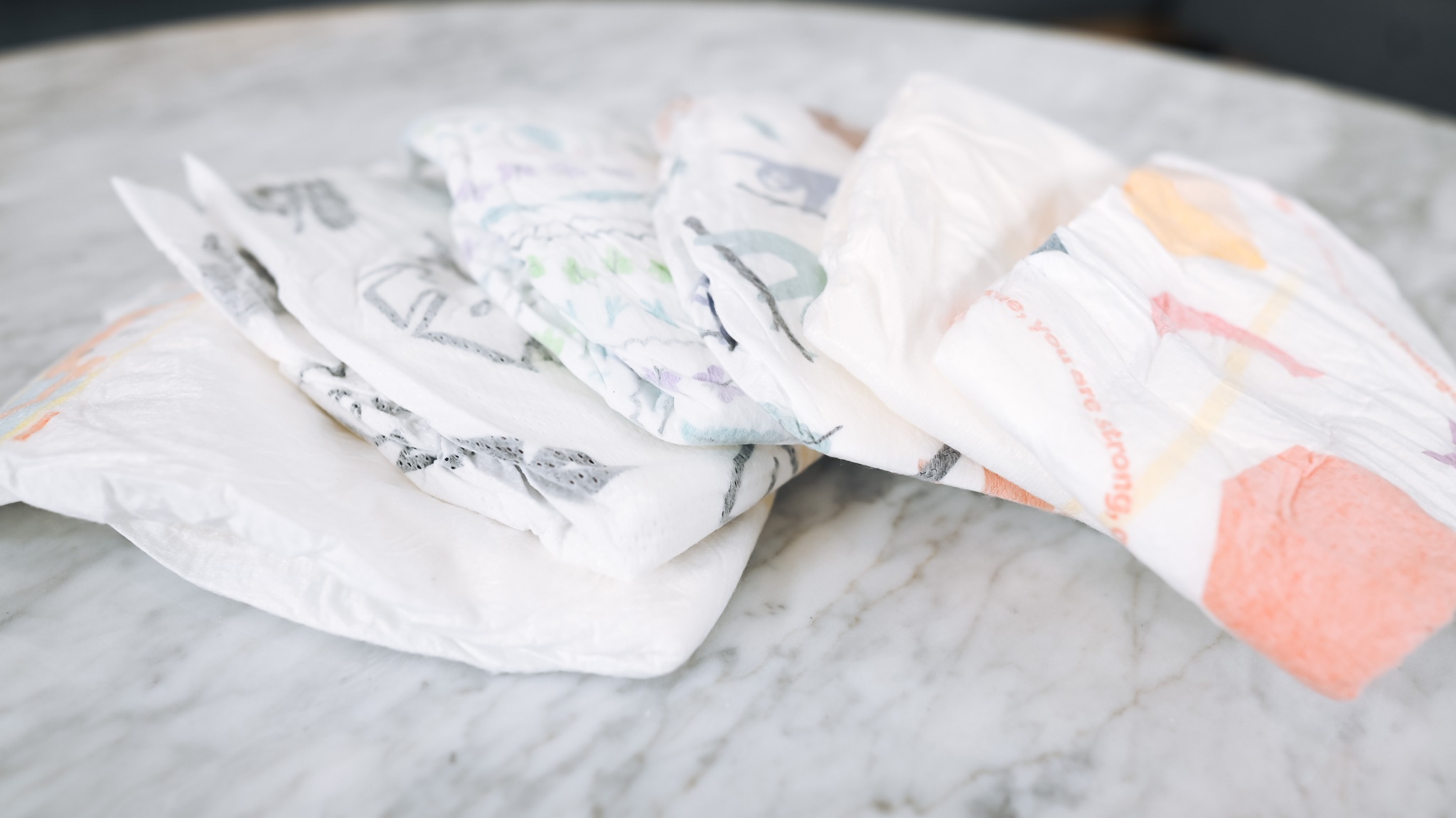
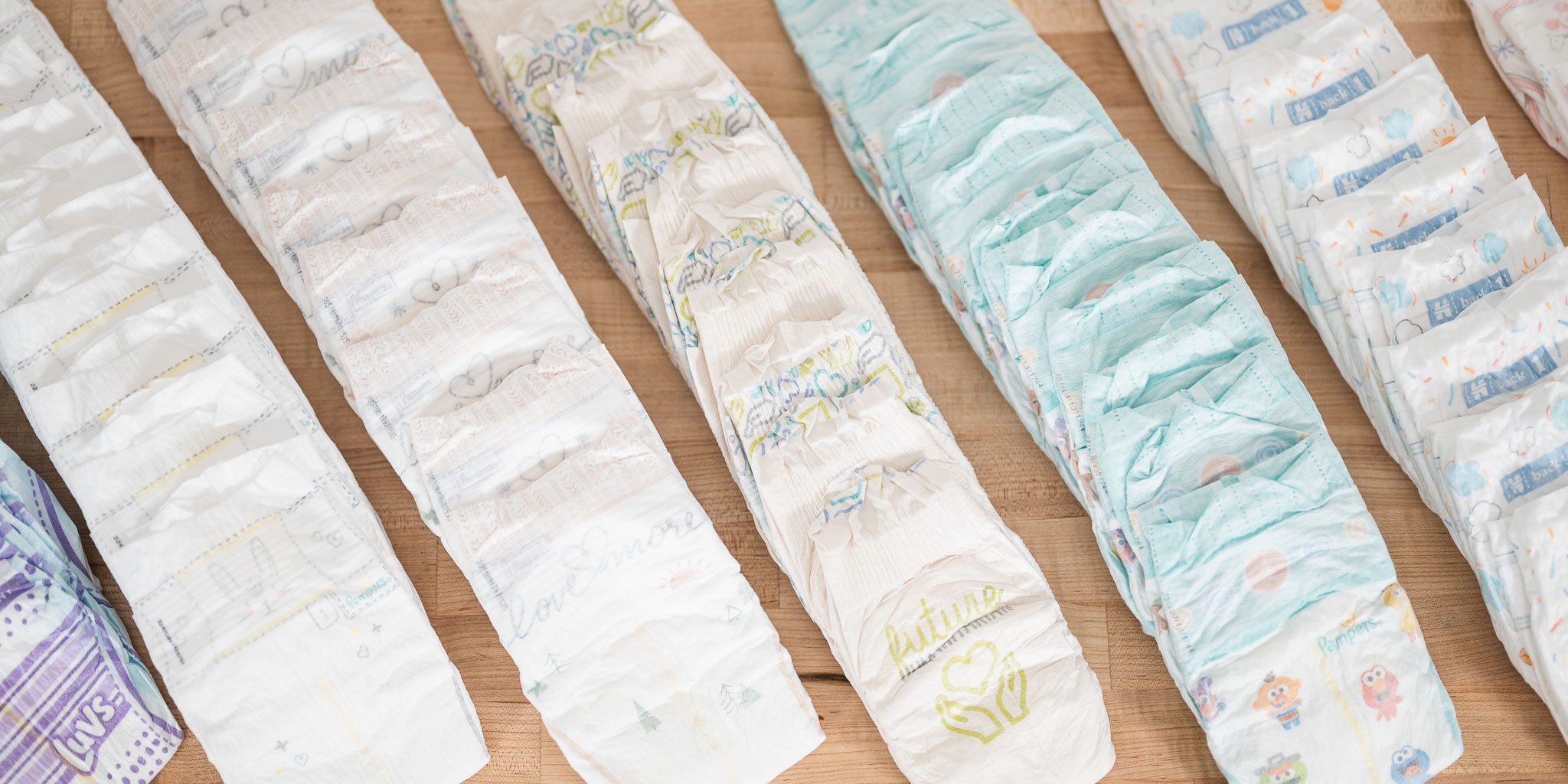
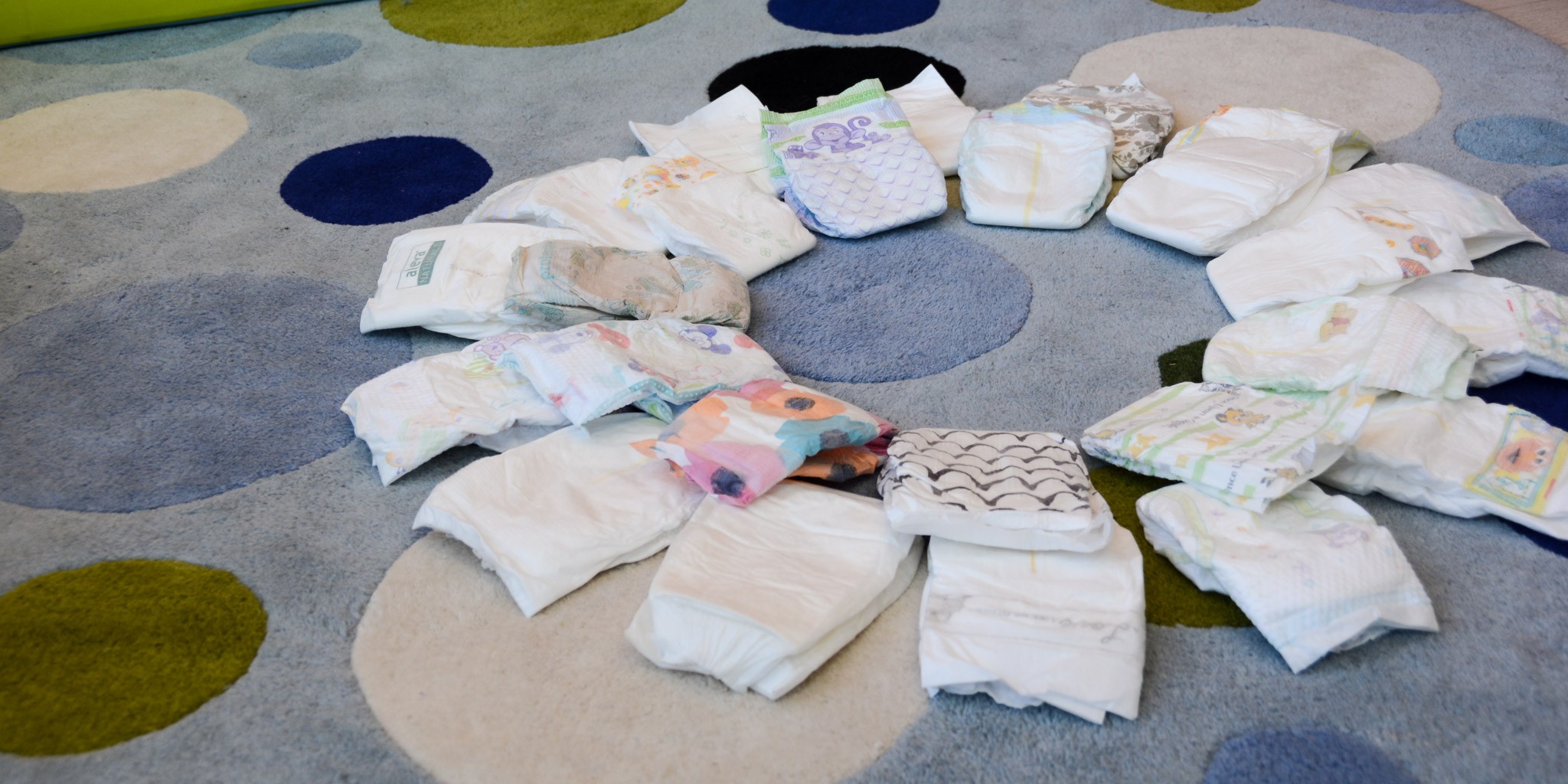
Over time, we've tested over 40 disposable diapers in our lab. Some of these contenders are shown here.
Credit: Abriah Wofford
The individual diapers vary depending on the brand, and we cannot make an all-encompassing statement because it just depends on the diaper. However, big-box or not, many well-known options place relatively low in the group. It might be time to forget about the popular or well-known brand names in diapers if you want to find a truly excellent option.
Babyganics experienced excessive runoff in our tests for leak protection.
Credit: Genaveve Bradshaw
Leakage
Leakage includes an analysis of how well the diaper contains leaks so urine and other substances stay where they are supposed to be instead of outside the diaper on clothes and other things. Quick absorbency is a factor in leakage because fast-absorbing liquid can't escape, but leg elastic, gussets, and the overall design also play a role.
The top performers for leakage are Parasol, Kirkland Signature, Huggies Little Snugglers, Hello Bello Premium, and Pampers Pure. The diaper with the lowest leakage analysis result is Target Up & Up and Babyganics Triple Dry. Seventh Generation Sensitive Protection and Dyper Bamboo also score low for leak protection. When you combine absorption and leakage scores together, Babyganics is one of the worst-performing diapers in the group. Parasol, Kirkland, and Hello Bello are some of the best.
The Kirkland diaper is durable and we didn't experience any problems related to quality or durability during testing.
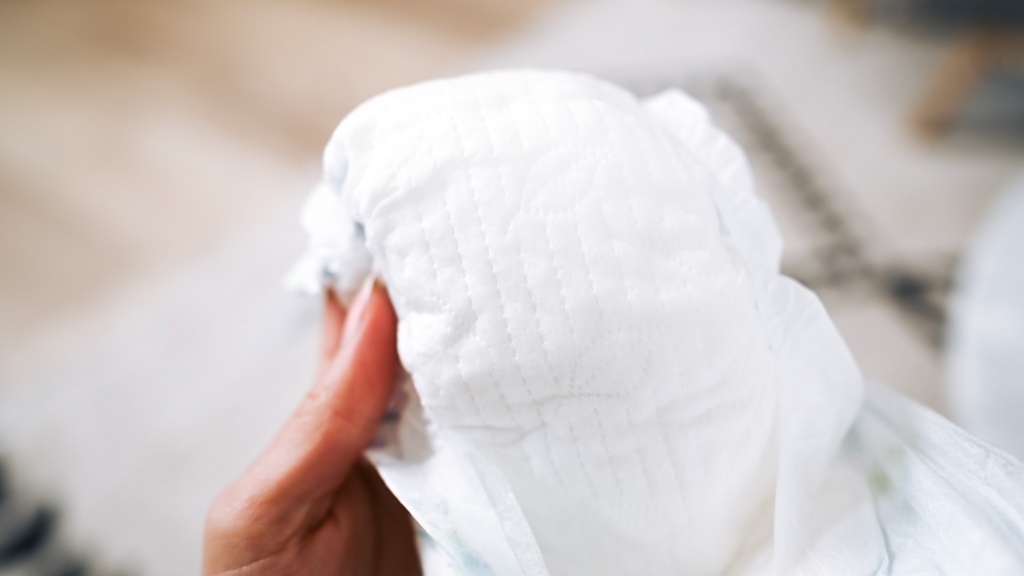
The materials on the inside of the Kirkland diaper are very soft and skin-friendly.
Comfort
Comfort may not be at the top of your diaper consideration list, but your baby will be wearing diapers daily, and comfort could make a difference. Tight leg holes or itchy elastic can create unnecessary skin irritation and irritable behavior.
We compared all diapers side-by-side for softness, padding, leg elastic, and more. Kirkland diapers came out on top in this metric. These diapers almost feel like cloth and have some of the most skin-friendly leg hole elastic on the market.
Comfort and durability don't often go together, and the Seventh Generation is comfortable but not as durable as the competition.
Credit: Abriah Wofford
The most comfortable diapers in a side-by-side assessment and in-house lab survey are Kirkland Signature, Parasol Free and Clear, and Seventh Generation. Both Huggies brand diapers and Pampers Swaddlers also score well. The lowest scoring for comfort is Naty. This diaper has an almost paper feel, a design we assume aids in their claim of biodegradability but does nothing to keep little ones cozy.
The Eco by Naty diaper suffered from more faulty tabs than the competition and the outer cover can tear if a wet diaper is left on too long.
Credit: BabyGearLab Staff
Durability
Disposable diapers aren't designed to last forever, but if they can't make it for a few hours or fall apart when wet, they aren't much use and could cost you more money in the long run. We analyzed the diapers for their ability to stay together, tab quality and resticking properties, and more to determine the most durable in the bunch.
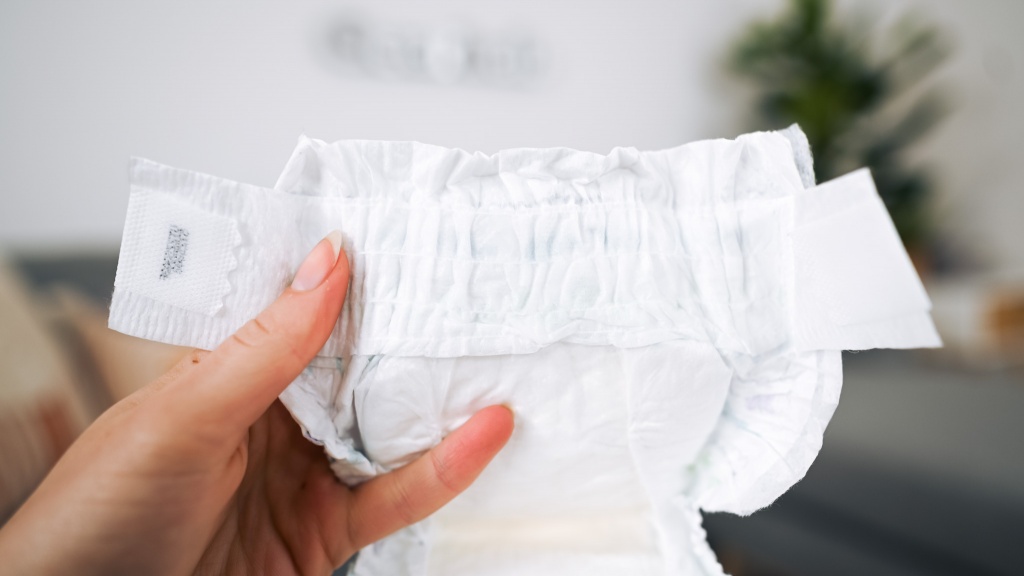
The most common complaint amongst users is faulty tabs. The tabs either pull off before a diaper is even on the baby, or they won't reattach if you remove them to check a diaper or want to secure a rolled-up diaper for disposal. This problem can make a diaper unusable if it happens before wearing it.
Testing diaper durability is important, including how easily closure tabs might pull off under normal use.
Credit: Abriah Wofford
The second most common complaint is diapers that leak SAP or fall apart when really wet. Some of this might be user error and leaving a diaper on for too long, while others might be design-related due to biodegradable material. We think the tab issue is a bigger problem as it can render a diaper unusable, increasing the per-diaper cost. Changing your baby's diaper regularly can often head off the latter issue.
Hello Bello is a durable and adorable diaper with good test scores in key metrics like absorption and leak protection.
Credit: Abriah Wofford
The most durable diapers in our tests include Parasol Clear and Dry, Pampers Baby Dry, Huggies Little Snugglers, Hello Bello Premium, Dyper Bamboo, Bambo Nature, and Mama Bear Gentle Touch. The least durable are Eco by Naty thanks to some faulty tabs pulling off and the diaper cover breaking apart if you leave it wet too long between changes. Even though Naty didn't perform well in this metric, we still think they deserve consideration for their nod to eco-friendliness and health, as well as absorbency and leakage results.
Bambo is a more eco-friendly option than some of the traditional options we reviewed.
Credit: BabyGearLab Staff
Eco-health
Eco-health is a collection of factors influenced mainly by the manufacturing process and the addition/omission of dyes, fragrances, lotions, or chemicals that create a color change to indicate diaper wetness. Many babies are sensitive to chemicals, and we like to err on the side of caution by limiting exposure to unnecessary chemicals whenever possible, especially on sensitive skin. Given the availability of effective diapers without additives, we think it's worth considering when choosing the right diaper for your little one. Even if it only decreases the risk of diaper rash, it is worthy of serious consideration.
Luvs doesn't provide a full disclosure of what materials were used and how they can affect the environment or your baby's health.
Credit: Abriah Wofford
We included information on what the manufacturer claims, either on the packaging or their website, in our comparison chart. We prefer transparent brands that don't require us to do a deep dive or send emails to find out the details. We think parents have a right to know what is in their baby's diapers and how they were made, and they shouldn't have to play detective to find the answers. We prefer diapers without added fragrance/scents and are lotion, latex, and dye-free. Being manufactured using totally chlorine-free methods of production is also preferred.
The Eco by Naty diaper is a top-performing green diaper you can feel good about.
Credit: BabyGearLab Staff
Disposable diapers are perhaps one of the most significant impacts your baby will have on the environment during their first years of life. An estimated 90% of babies in the US use disposable diapers, and there are 4 million babies born each year, each going through 6,000+ diapers. When you consider these numbers, the diapers' environmental impact in landfills is ginormous.
We've tested more diapers than we can count with new updates several times a year since 2013.
Credit: Abriah Wofford
Here's some information we believe to be factual:
The Environmental Protection Agency reports that about 20 billion disposable baby diapers end up in landfills yearly, a shockingly large amount. Yet, we feel that might be low (our estimate is nearly 22 billion). This amount creates approximately 3 billion pounds of US landfill waste each year.
Traditional disposable diapers do not degrade at a reasonable pace in landfills due to the plastic materials and lack of air exposure (hampering biodegradation).
Some % of disposed of diapers contain feces (the right thing to do is flush solids before throwing away the diaper — who knew?), which presents a bio-hazard risk to landfills and creates the potential for human waste to seep into groundwater.
You put poop where?
Another factor that may sway the debate of "which is greener" between cloth diapers and disposables is your poop disposal habits. If you use modern cloth diapers in tandem with a flushable liner, you are (hopefully) flushing your baby's poo down the toilet. You should also flush poo from disposable diapers, but this is not a common practice (or even common knowledge) among parents. Flushing poo is far less damaging to the environment than wrapping it up, throwing it in a landfill, and creating a biohazard risk. Human poop is considered bio-waste and should not be sent to the landfill. We suspect most parents do not take this extra precaution in disposing of waste.
We tested both green and traditional disposable diapers in each iteration of our disposable diaper review.
Credit: Abriah Wofford
Green Diaper Performance vs. Traditional
The decision to use conventional or green diapers wasn't always clear or easy. Many people still think that a green diaper cannot perform on par with traditional disposables. However, our analysis of found this long-held assumption to be largely untrue. Modern green diapers often outperform traditional diapers on absorbency and most other metrics, earning them top-ranking spots in our lineup. Hooray!
For eco-friendliness, we looked at how the diapers were manufactured, whether they use renewable or recycled resources, and if they are biodegradable. Remember that no diaper will degrade inside a plastic bag in a landfill without exposure to the elements, so we caution that your expectations should be realistic and align with how you plan to dispose of your diapers. While a handful of diapers now claim to be compostable, it is not the same kind of composting you do in your yard, and they must go to a dedicated facility that specializes in diaper composting.
Six new additions to our recent update to the disposable diaper review included some impressive updates and a disappointment from a previous winner.
Credit: Abriah Wofford
Conclusion
Online retailers, advertisements, and stores are loaded with diaper options, making bold claims to intrigue new parents. New! Green! Tried and true! With all this noise bombarding you, it can be challenging to determine which one is best for your baby, goals, and budget. If you add cloth diapers to this, the possibilities become even greater. The plethora of diapers may be so overwhelming that you may feel compelled to just grab anything, select something at random, or choose the cheapest option or well-known brand. However, thanks to our detailed testing and tiny testers, you can make a more informed decision. No matter which diaper you purchase, our insights and unbiased testing and analysis can help you make the best choice for superior diapering.
—
Juliet Spurrier, MD, Wendy Schmitz & BabyGearLab Team